A rain barrel is one of the most straightforward sustainable upgrades you can make to a garden. Position one beneath a downspout, and water that would otherwise rush off your roof and into the drain is captured and stored, ready to use whenever your garden needs it. It costs nothing to collect, it’s naturally soft and unchlorinated, and your plants will respond well to it.
From compact single barrels for smaller gardens to linked systems that store hundreds of gallons, there’s an option to suit every outdoor space and every level of rainfall.

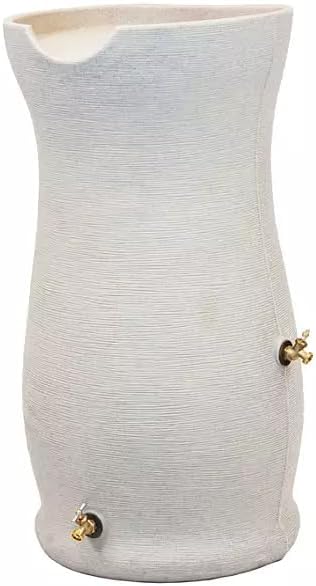
Mains water is easy to take for granted — you turn on the tap and there it is. But treated, pressurised drinking water is an expensive and energy-intensive resource to deliver, and using it to water a garden when a perfectly good alternative falls freely from the sky is something that’s hard to justify once you start thinking about it. A rain barrel changes that equation simply and permanently.
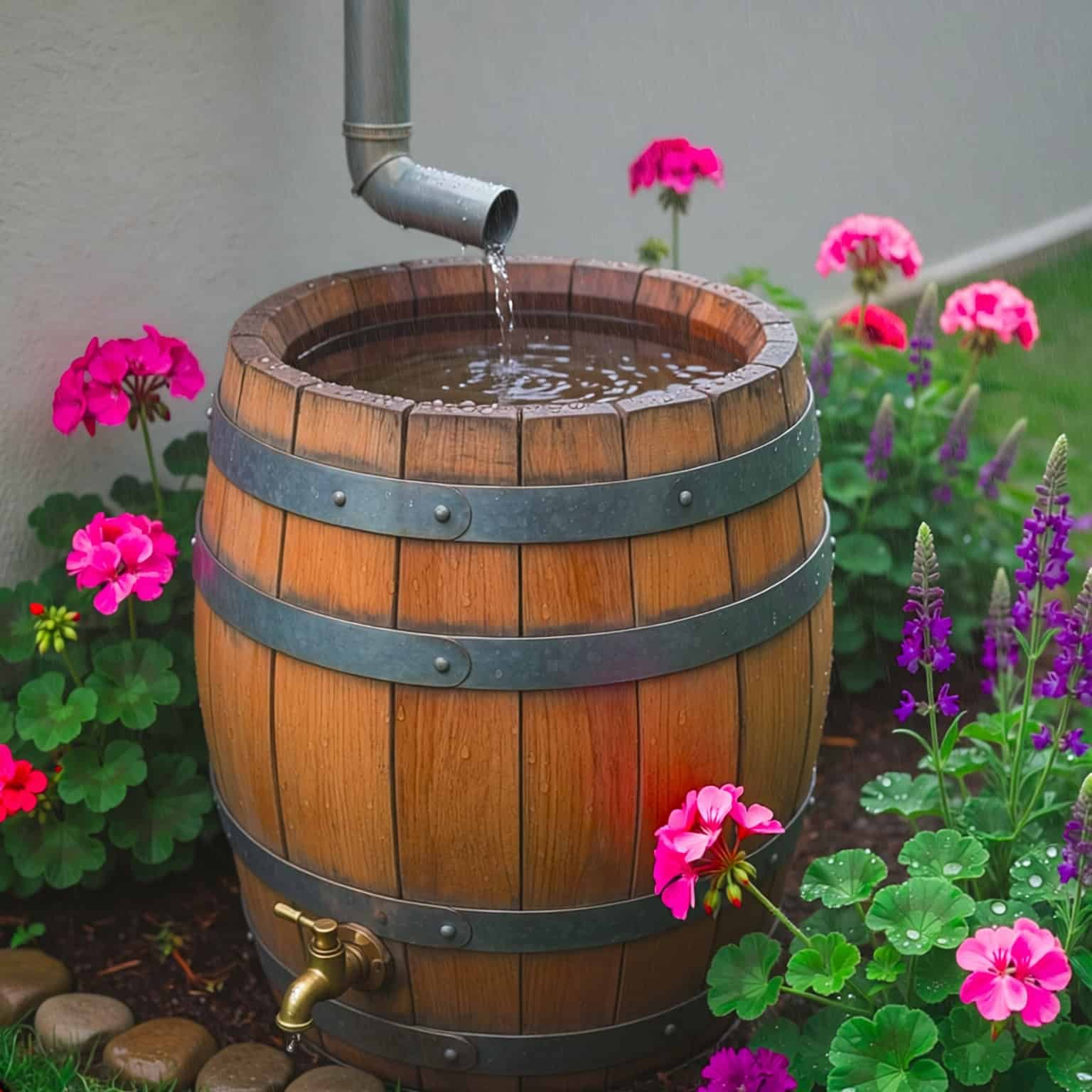
The principle couldn’t be more basic. Rainwater lands on your roof, travels through the guttering and down the downspout, and instead of disappearing into the drain it flows into a barrel where it waits until you need it. A standard single barrel holds anywhere from 50 to 100 gallons depending on the model — enough to make a meaningful difference to how often you reach for the hose during a dry week, and enough to refill from a single decent downpour in most climates.
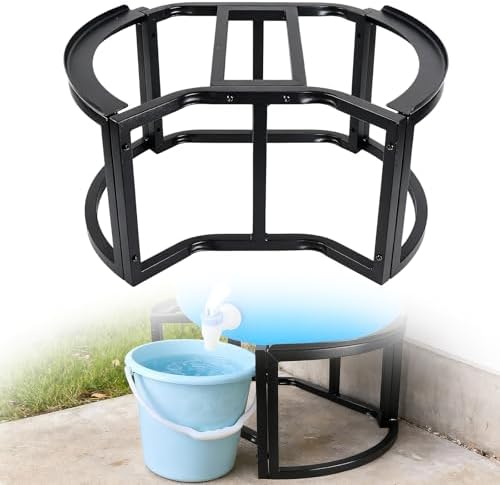
- Single barrels are the natural starting point. Most come with a tap near the base for easy access, an overflow outlet to manage excess during heavy rainfall, and a sealed lid to keep out insects and debris. Installation is straightforward — cut the downspout at the appropriate height, fit a diverter, and position the barrel beneath it on a firm, level surface. Raising it slightly on a platform or stand gives you enough clearance to get a watering can comfortably under the tap, which makes day-to-day use considerably more convenient.
- Linked systems are the logical next step for anyone who finds a single barrel fills up too quickly or wants to make the most of heavier rainfall. Two or more barrels connected in series fill sequentially — once the first is full, water flows through to the second. It’s a simple addition that effectively doubles or triples your storage capacity without significant extra cost or complexity, and it’s particularly worthwhile in gardens with high water demand during summer.


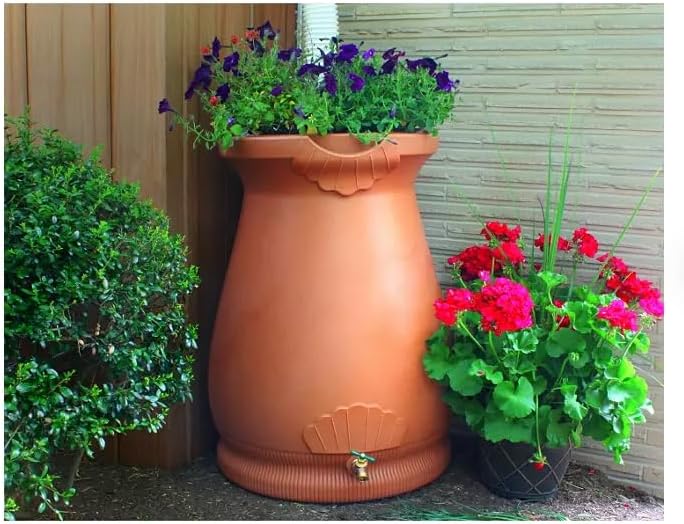
- Decorative rain barrels are worth considering for gardens where appearance matters as much as function. Traditional wooden barrel designs, stone-effect resin models and planter-style units that double as container gardens are all widely available and blend far more naturally into a well-tended garden than a standard plastic barrel. They work on exactly the same principle — they’re just considerably easier to look at. For a front garden or a visible courtyard space, the difference between a utilitarian green barrel and a well-chosen decorative model is significant.
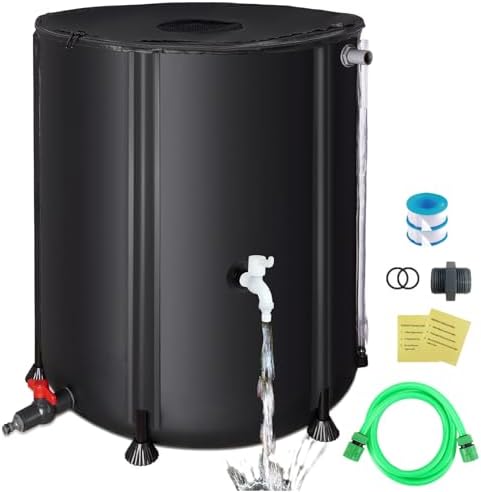
- Collapsible rain barrels are a relatively recent addition to the market and worth knowing about if storage space is limited. Made from flexible, heavy-duty materials, they fold down flat when empty — taking up a fraction of the space a rigid barrel requires — and expand to full capacity when in use. Most hold between 50 and 100 gallons, connect to a standard downspout in the same way as a conventional barrel, and come with the same tap and overflow fittings you’d expect. They’re a particularly practical option for smaller gardens, balconies with limited floor space, or anyone who wants to pack the barrel away over winter without the awkward business of storing a large rigid container.


A few practical details apply across all types. The barrel needs to sit on a firm, level surface — a full barrel is extremely heavy and an uneven base is a tipping risk. The overflow outlet should be directed away from the house foundations, ideally toward a lawn, border or rain garden where the water can soak into the ground naturally. And it’s worth fitting a child and pet-safe lid if either are likely to be near the barrel unsupervised.
For more on setting up a complete rainwater harvesting system, our guide to rainwater harvesting and rain barrel installation covers everything you need to know before you buy.
More about rain barrels
Rain barrels work hardest in climates with regular but unpredictable rainfall — the kind of weather where a dry week can follow a wet one without much warning. Having a stored reserve means your garden isn’t entirely dependent on either the tap or the timing of the next shower, which gives you a level of flexibility that’s particularly valuable during the summer months when water use is highest and rainfall least reliable.
They’re also one of the few garden purchases that actively pays for itself over time. The water is free, the setup cost is modest, and the reduction in mains water use adds up noticeably over a season.