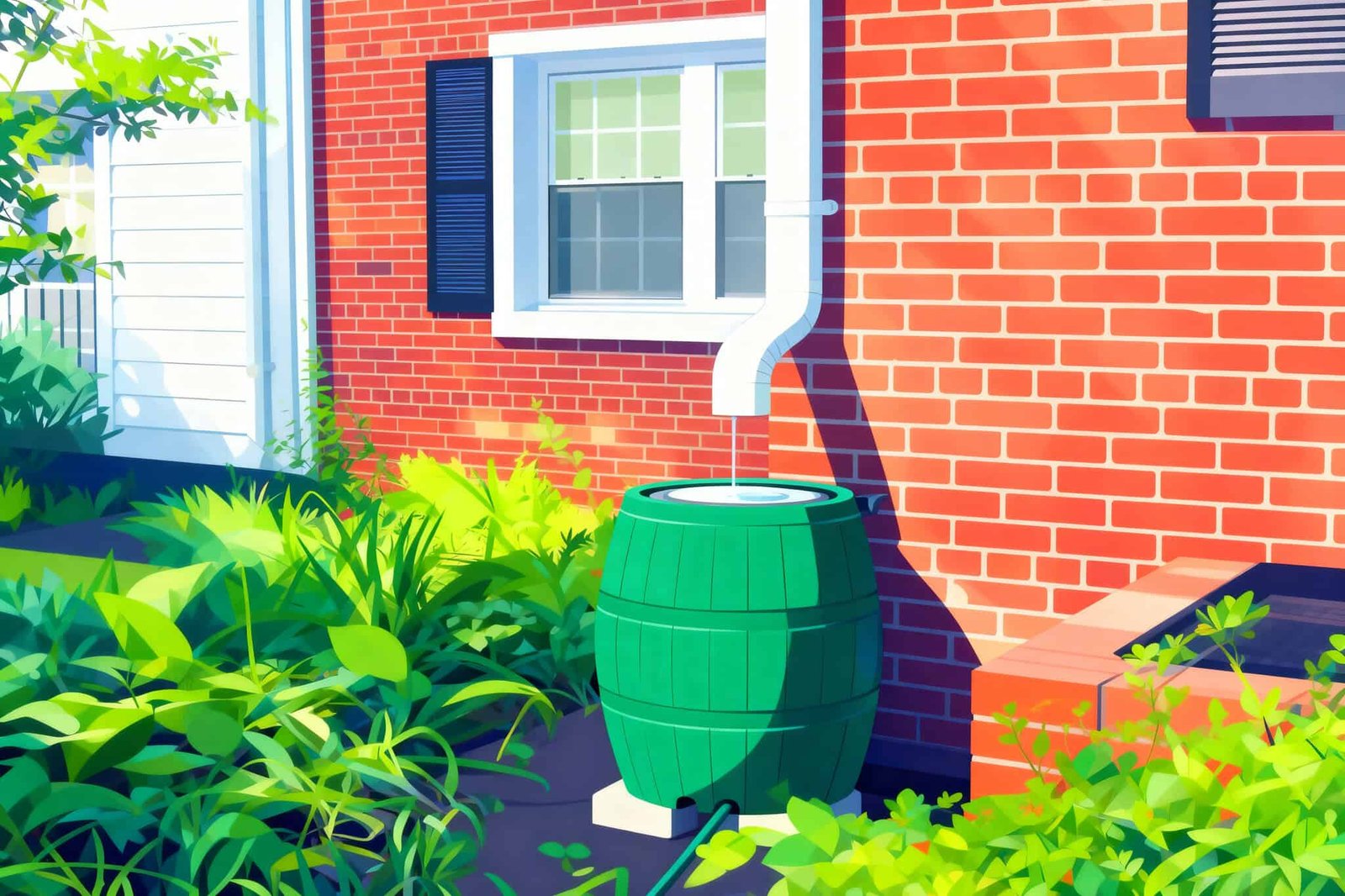
There’s something quietly satisfying about collecting rainwater. It costs nothing, it reduces your reliance on the tap, and it gives your garden a supply of soft, unchlorinated water that plants genuinely respond well to. Rainwater harvesting has been practised in one form or another for thousands of years, but the modern rain barrel system makes it more accessible than ever — and for most gardens, it’s one of the simplest sustainable upgrades you can make.
Why bother harvesting rainwater?
A garden hose left running uses far more water than most people realise. Even a relatively brief watering session can consume dozens of gallons of treated tap water — water that has been processed, pumped and chemically treated before it reaches your garden. Rainwater, by contrast, arrives ready to use. It’s naturally soft, free of the chlorine and fluoride found in mains water, and slightly acidic in a way that many plants prefer. Collecting it means that water which would otherwise run off your roof, through your gutters and into the stormwater drain is put to use instead.
A barrel roughly the size of an oil drum holds around 70 gallons — enough to make a meaningful difference to how often you need to reach for the hose.
Choosing the right location
The most straightforward place to position a rain barrel is directly beneath a downspout from your guttering. This is where the bulk of your roof runoff is channelled, and positioning the barrel here means it fills quickly during even moderate rainfall without any additional pipework.
A few things to consider when choosing the exact spot:
The barrel needs to sit on a firm, level surface. This is more important than it might seem — a full 70-gallon barrel is extremely heavy, and an uneven surface puts it at risk of tipping over. A paved area, a concrete slab, or a purpose-built platform are all suitable. Avoid placing it directly on soft ground that might shift or settle over time.
Raising the barrel slightly on a sturdy platform or stand has a practical benefit too — it gives you enough clearance to get a watering can underneath the tap, which makes using it far more convenient day to day.
Installation
Most rain barrels are designed to connect directly to an existing downspout. The process typically involves cutting the downspout at the appropriate height and fitting a diverter — a simple device that redirects water into the barrel when it’s not full and allows it to continue down the downspout once the barrel reaches capacity. This avoids overflow issues and means the system manages itself without constant monitoring.
If your downspout doesn’t align neatly with where you want the barrel to sit, a short length of flexible downspout extension can bridge the gap without much difficulty.
Managing overflow
Overflow is something worth planning for from the start. During heavy or prolonged rainfall, even a large barrel will fill up, and without a proper overflow solution the excess water will pool around the base — which can cause damp issues against walls or foundations over time.
Most commercial rain barrels include an overflow port for exactly this reason. There are two sensible ways to use it. The first is to connect a second barrel in series, effectively doubling your storage capacity — useful if you have the space and want to make the most of a heavy downpour. The second is to attach a length of hose to the port and direct the overflow away from the building towards a lawn, border or rain garden where the water can soak into the ground naturally rather than sitting against the wall.
Linking multiple barrels
If one barrel isn’t enough for your garden’s needs, linking two or more in series is straightforward. Most barrels have inlet and outlet ports specifically designed for this purpose. Water fills the first barrel, then flows through a connecting hose into the second once the first is full. It’s a simple way to significantly increase your storage without needing a more complex system.
Keeping it simple
Rain barrel systems don’t need to be complicated to be effective. A single well-positioned barrel connected to a downspout, sitting on a level surface with a basic overflow solution in place, is enough to make a noticeable difference to how much tap water your garden consumes. Start simple, see how quickly it fills during a typical week of weather, and expand from there if you find yourself running low.
For more on reducing water use across your garden, our guide to eco-friendly garden watering is a good place to continue.
Illustration based on a photograph “rain barrel” by Arlington County licensed under CC BY-SA 2.0; image used for editorial purposes with no endorsement implied.