A garden drip system takes the daily effort out of watering while using considerably less water than most conventional methods. Rather than spraying broadly from above, water is delivered slowly and directly to the root zone of each plant through a network of tubing and emitters — precisely where it’s needed, at a rate the soil can actually absorb.
From simple starter kits for small beds and borders to more comprehensive systems covering larger plots and vegetable gardens, there’s a drip setup to suit most outdoor growing spaces.
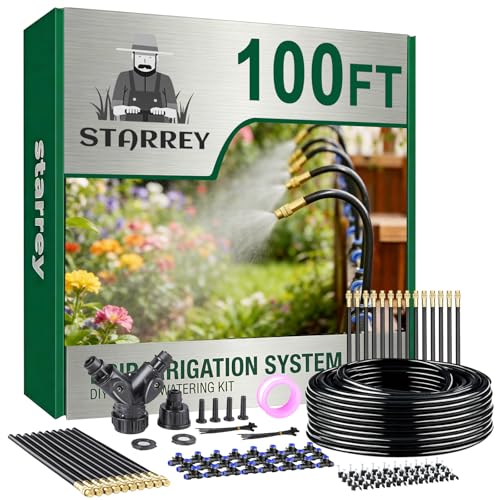
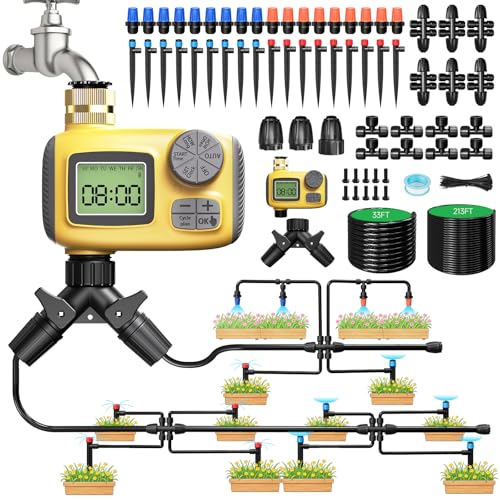
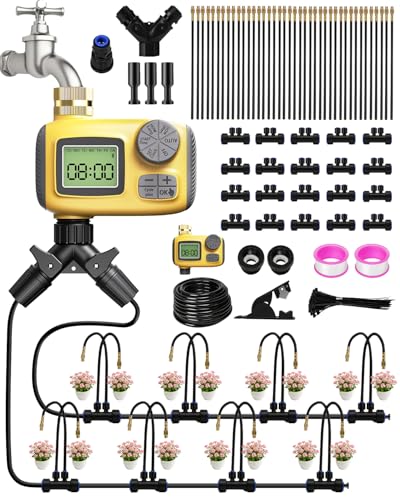
- Everything in One Box – Everything included: 100FT 1/4″ tubing, 24 nozzles, connectors, stakes, ties & end caps. Covers …
- Quick Connect in 10 Mins – Tool-free assembly with quick-connect fittings. Includes tee connectors & hose adapter for le…
- Bend & Direct Copper Nozzles – Flexible aluminum-core rods (20cm) bend to reach exact plant bases. Durable copper nozzle…
Hand watering a garden properly takes time, and it’s easy to get wrong. Too much in one session, not enough in the next, water landing on foliage and paths rather than roots — these are the kinds of inefficiencies that add up over a season both in terms of water wasted and plant health compromised. A garden drip system removes most of that variability in one go.
How drip systems work
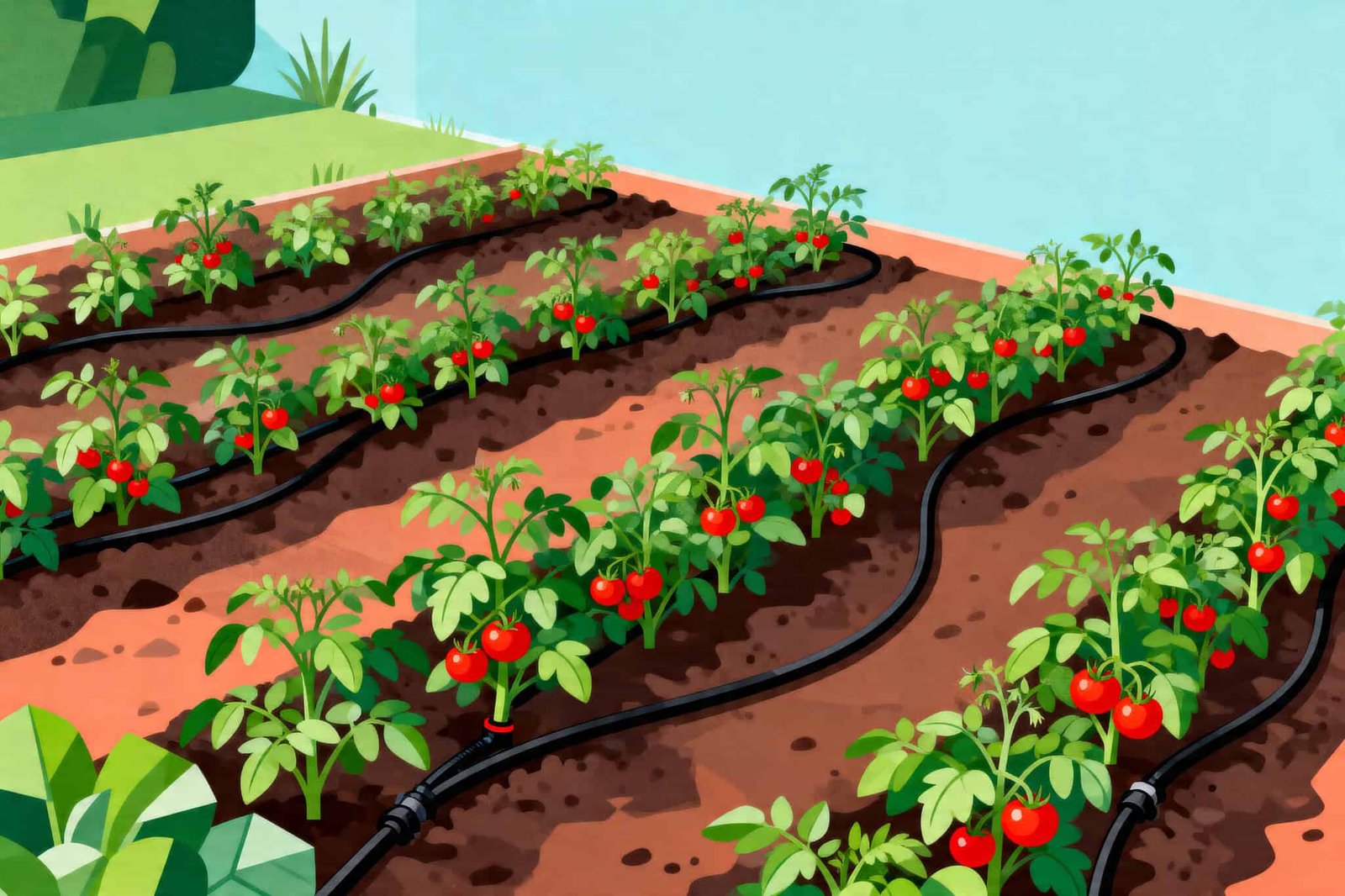
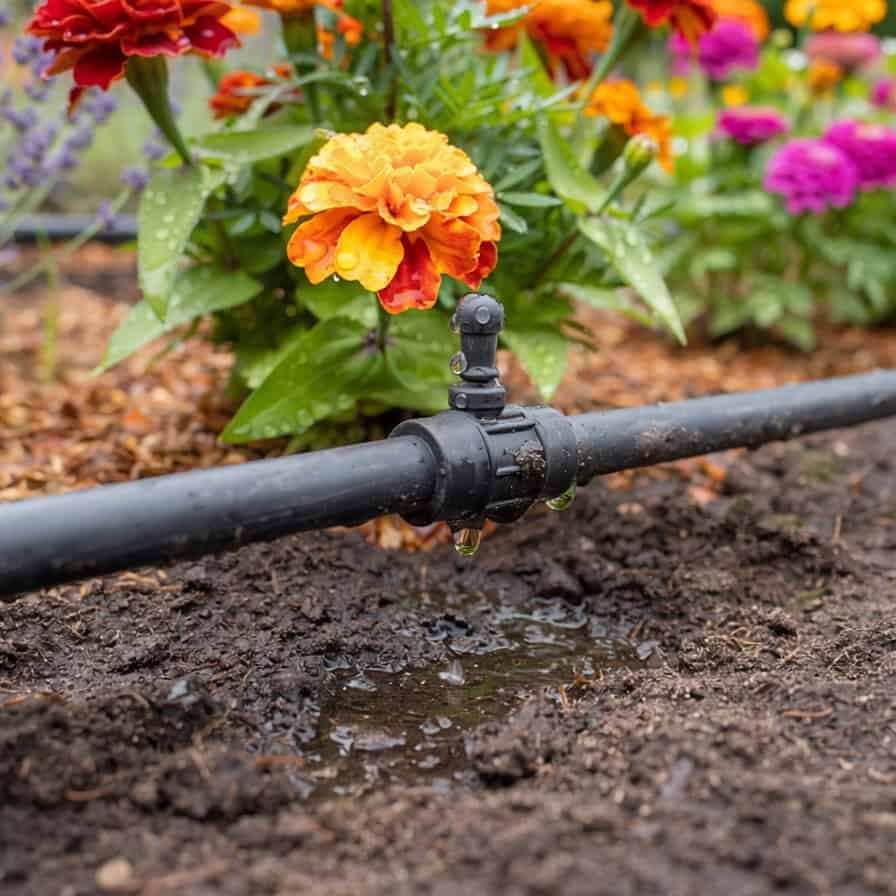
The principle is straightforward. A main supply line connects to your outdoor tap and branches into a network of narrower tubes, each ending at an emitter or drip nozzle positioned at the base of a plant. When the water is turned on, it travels through the tubing and drips slowly and steadily at each point, saturating the soil around the roots at a rate that allows proper absorption rather than running off the surface. The delivery rate is low by design — typically measured in litres per hour rather than per minute — which is what makes the system so efficient.
Types of drip systems
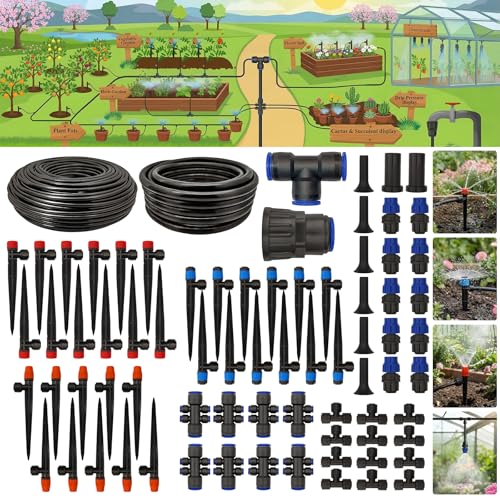
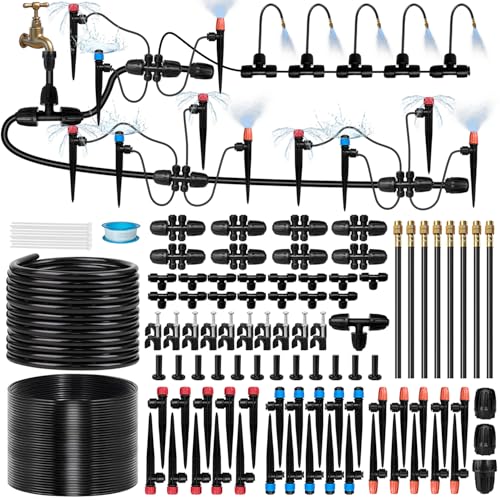
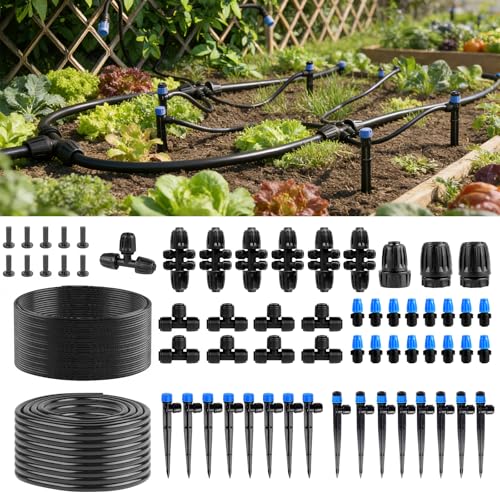
Most garden drip systems fall into one of two categories. In-line drip systems have emitters built into the tubing at regular intervals, making them well suited to rows of plants or evenly spaced borders where consistent coverage along a line is what’s needed. Individual emitter systems use separate drip nozzles connected to the main line by short offtake tubes, which allows each emitter to be positioned precisely at the base of a specific plant — more flexible for irregularly spaced planting or mixed borders where different plants have different water requirements.
Adjustable emitters are worth looking for — they allow you to dial the flow rate up or down at each point individually, which is useful when you have a mix of thirsty and drought-tolerant plants on the same system.
Installation and setup
A good quality drip system kit comes with everything needed to get started — main line tubing, connector fittings, emitters, stakes to hold everything in place, and a tap connector. Most systems require no specialist tools and can be laid out and connected in an afternoon. The tubing is flexible enough to follow the contours of a bed naturally, and a simple hole punch tool — usually included in the kit — makes adding or repositioning emitters straightforward as your planting changes.
It’s worth taking a few minutes to sketch out your garden layout before you start. Knowing roughly where each plant is and how the tubing will run between them makes installation considerably smoother and avoids having to redo sections once the system is laid.

Water saving benefits
The efficiency gains over conventional watering methods are significant. Because water is delivered at root level with minimal evaporation and no overspray onto hard surfaces or bare soil, a well-designed drip system typically uses 30% to 50% less water than overhead watering for the same results. During a hot summer, that saving is substantial — both in terms of environmental impact and water bills. Plants also tend to perform better on a drip system than they do with irregular hand watering, because the consistency of moisture delivery reduces the stress that fluctuating soil conditions cause.
Timers and automation
Adding a timer between the tap and the main supply line is the upgrade that turns a drip system from a convenient tool into a fully automated one. A basic mechanical timer costs very little and handles simple on/off scheduling. Digital timers offer more flexibility — multiple watering cycles per day, precise duration control, and in some cases moisture sensing that skips a scheduled session if the soil is already adequately damp. For anyone who travels regularly, works long hours, or simply wants to remove watering from their daily task list entirely, a timer-controlled drip system is one of the most practical garden investments available.
More about garden drip systems
A drip system doesn’t have to cover the entire garden to be worthwhile. Many gardeners start with a single bed — typically a vegetable plot or a border that needs the most consistent attention — and expand from there once they’ve seen how well it works in practice. Starter kits are inexpensive, the learning curve is minimal, and the difference in both water use and plant health tends to be noticeable within a single season.
For more on the case for drip irrigation, our guide to the advantages of drip irrigation is worth reading alongside this page.