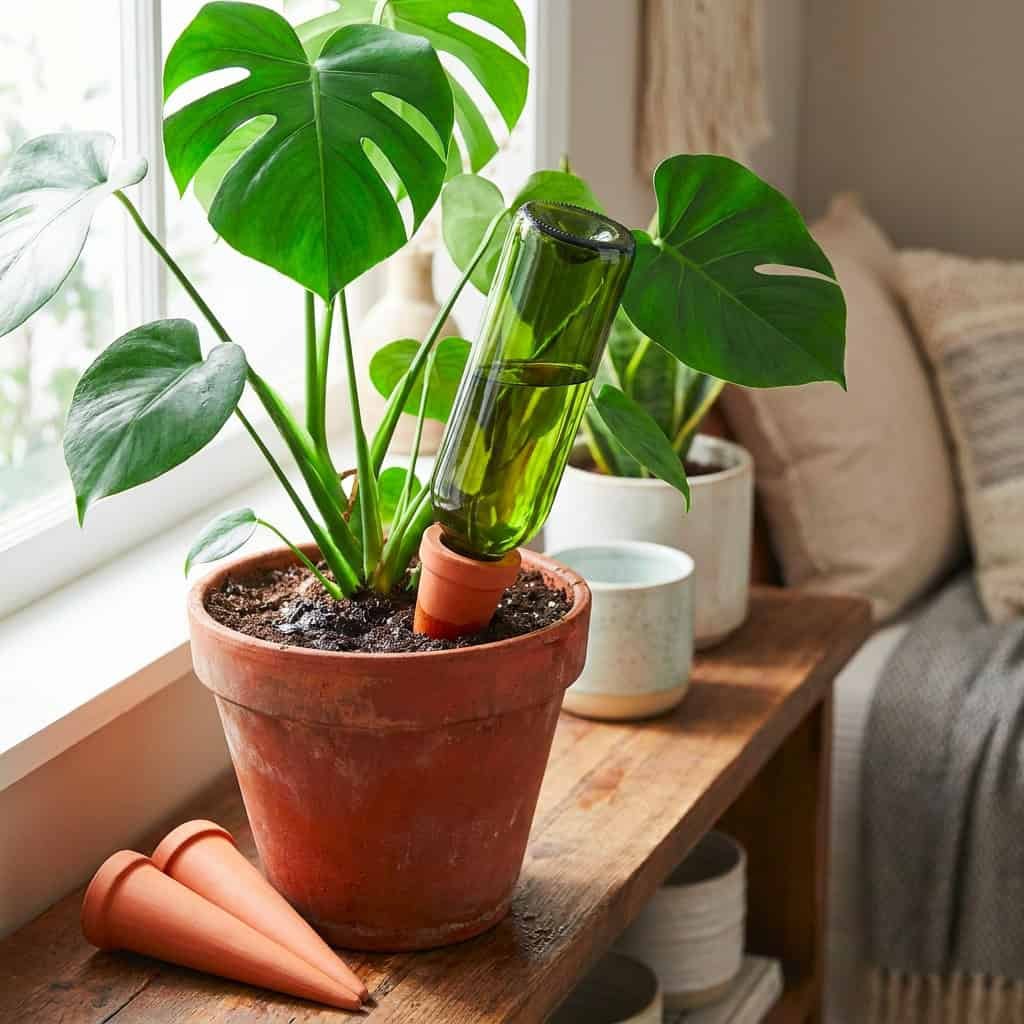
Watering spikes are one of those small garden purchases that quietly solve a problem most plant owners encounter regularly. Push one into the soil beside a plant, attach a water reservoir, and it delivers a slow, steady supply of moisture directly to the roots over several days — no timers, no complicated setup, no daily attention required.
From simple ceramic spikes that work with an inverted bottle to adjustable cone systems with regulated flow, they’re an affordable and effective way to keep plants consistently hydrated with minimal effort.

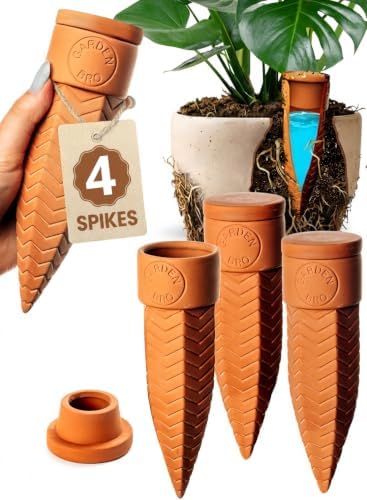

Consistent moisture is one of the most important factors in plant health, and it’s also one of the hardest things to maintain through hand watering alone. A thorough session one day, a rushed top-up the next, nothing the day after — that kind of irregularity stresses plants in ways that aren’t always immediately obvious. Watering spikes address this by delivering moisture slowly, steadily and directly to the root zone over an extended period without any daily involvement.
How do watering spikes work?
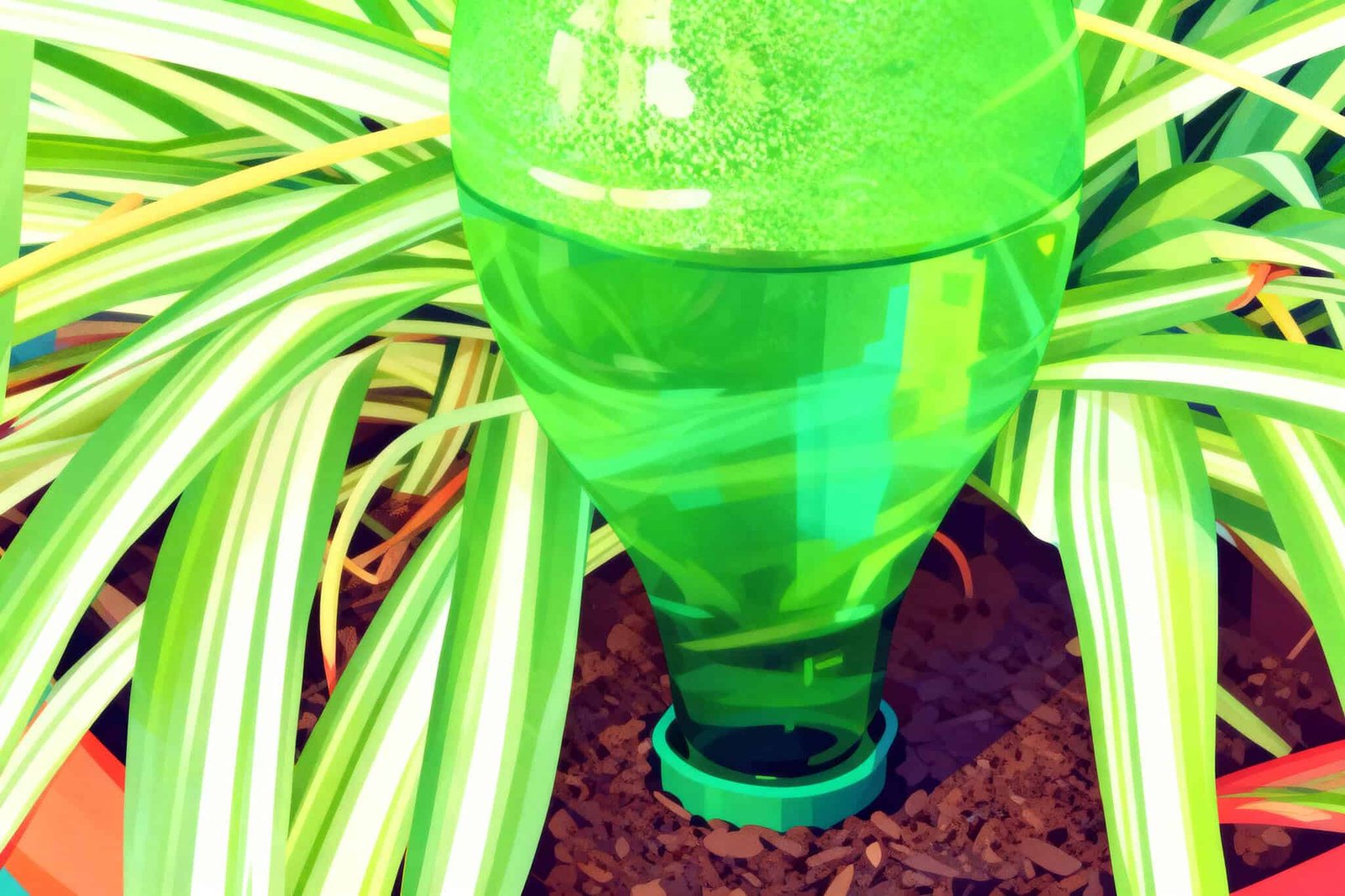
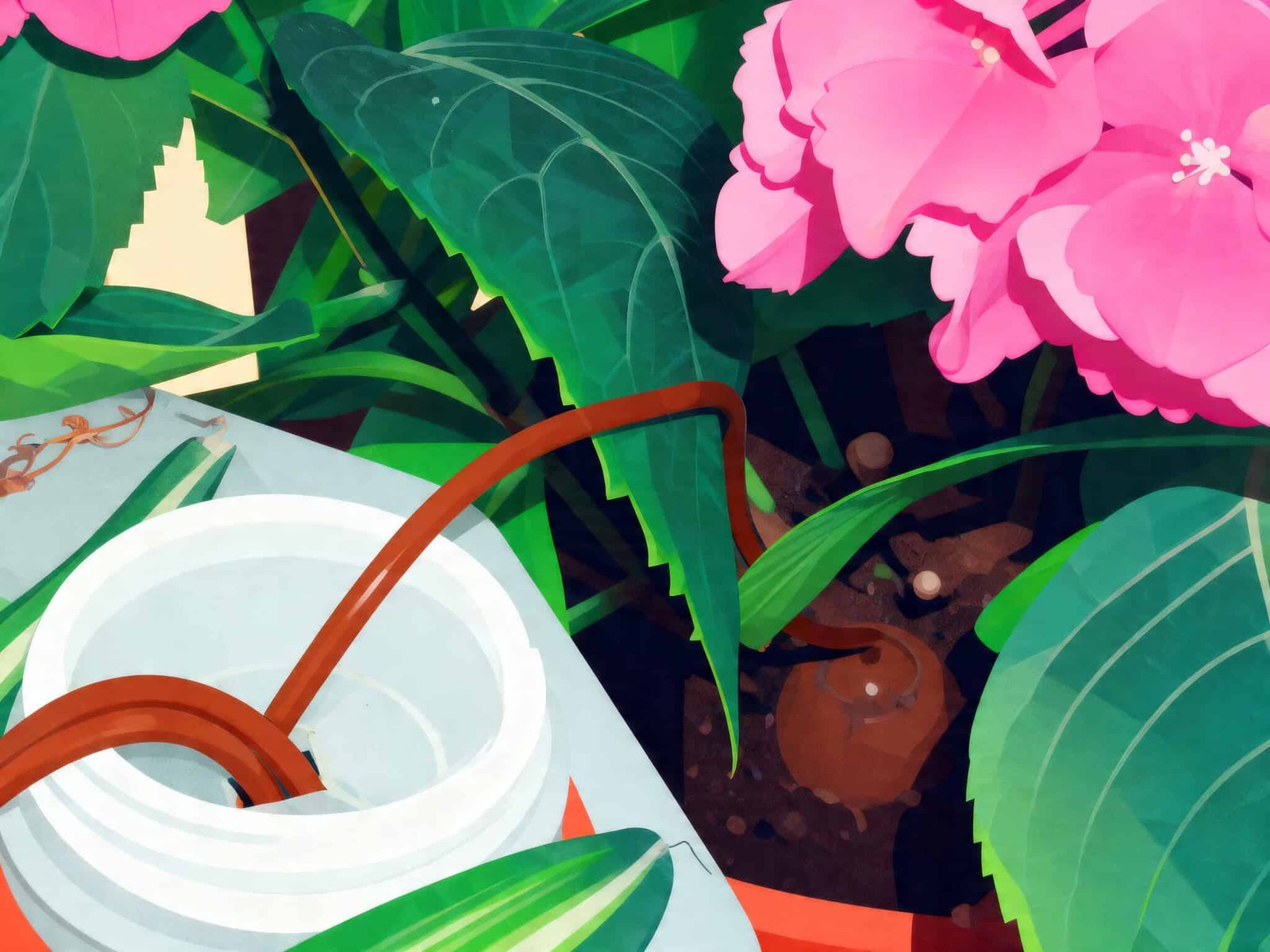
A spike pushed into the soil at the base of a plant connects to a water reservoir — typically an inverted bottle or dedicated container — which releases water gradually through the spike into the surrounding soil. As the soil dries it draws water through more actively. When moisture levels are adequate the process slows naturally. The plant takes what it needs, when it needs it, without the risk of overwatering that comes from applying a fixed amount on a fixed schedule.
Types of spikes and cones
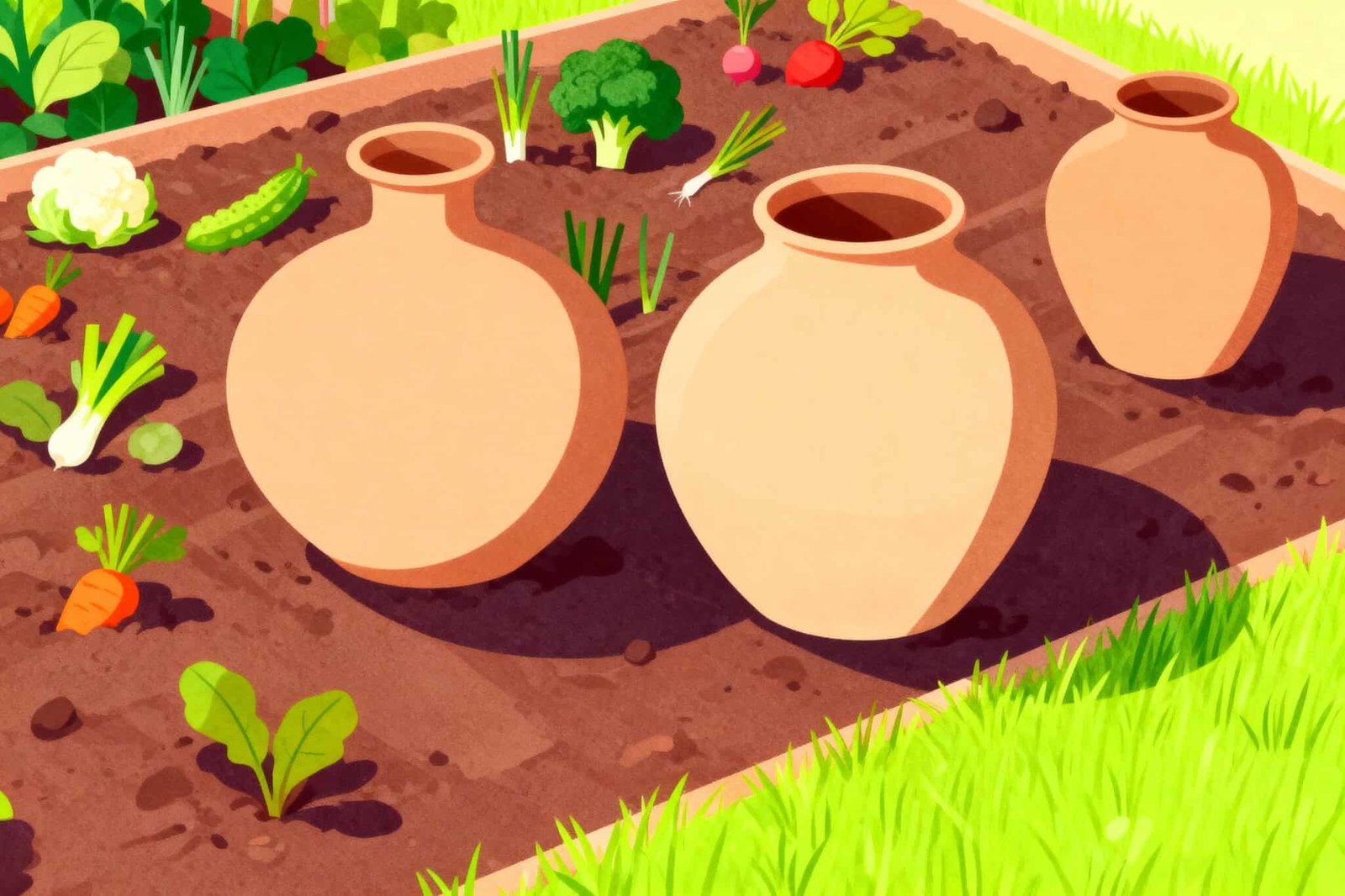
Ceramic spikes are the classic choice. The porous ceramic body releases water slowly and evenly, with the release rate governed naturally by soil dryness. Unobtrusive, long-lasting, and well suited to individual houseplants and container plants. Most connect to a standard wine or water bottle which acts as the reservoir.
Plastic adjustable spikes and cones offer more control. An adjustable valve lets you set the flow rate manually — useful when you have plants with different water requirements or want to extend the reservoir life over a longer period.
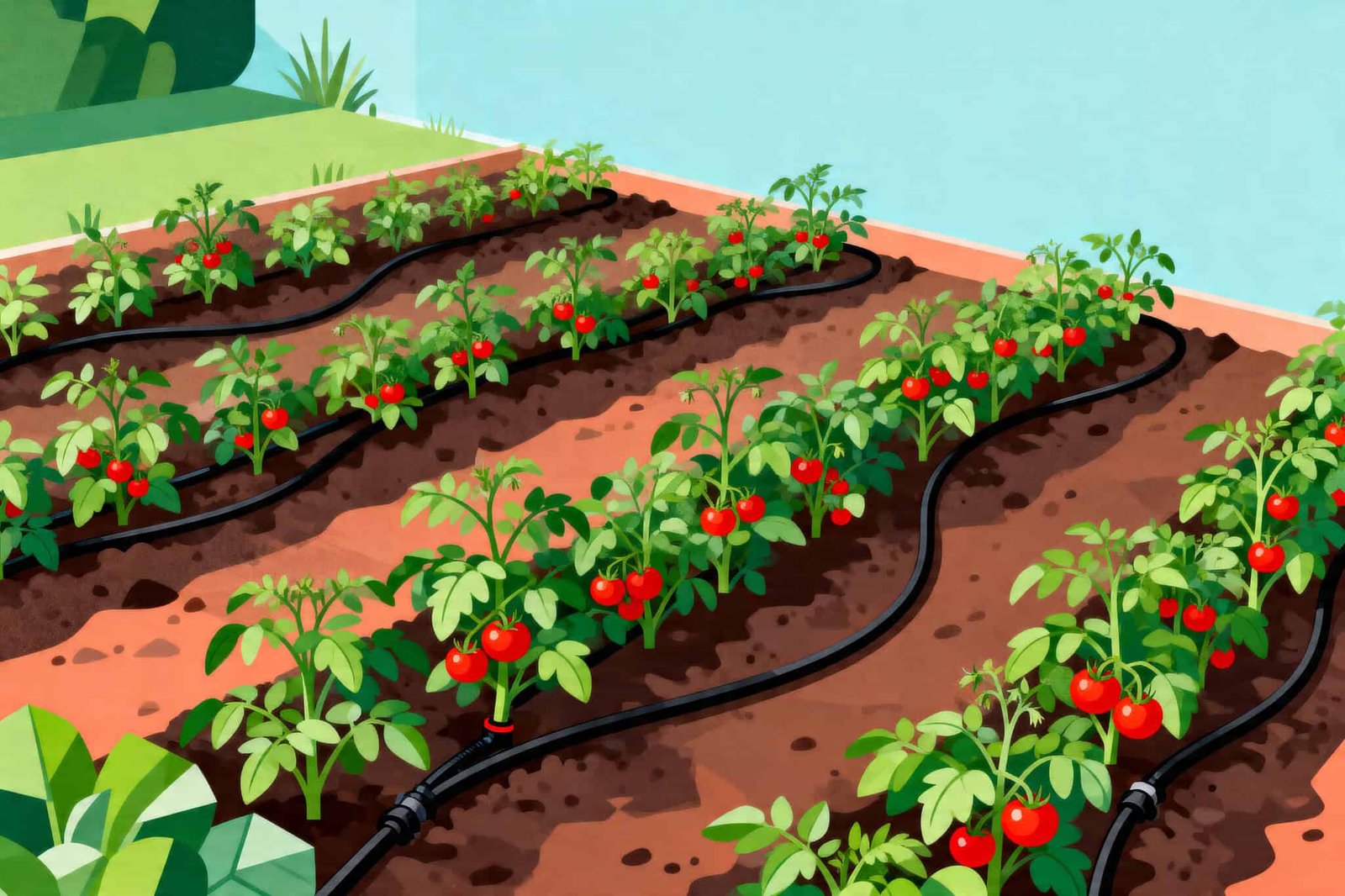
Gravity-fed drip spikes work from a dedicated reservoir rather than an inverted bottle, hold more water, and are better suited to extended periods away from home or greenhouse bench use.
Best use cases
Watering spikes come into their own in a few specific situations. They’re the most practical solution for keeping houseplants alive during holidays — a ceramic spike and a filled bottle will typically last a week to ten days without attention. In a greenhouse where conditions dry out quickly, a set of adjustable spikes takes the daily pressure off considerably. For balcony container plants in summer, where hand watering can become a twice-daily task, they provide a reliable buffer that reduces how often intervention is needed.
More about watering spikes
Watering spikes work best as part of a broader approach to consistent plant care. They’re particularly valuable as a backup during absences or busy periods, and as a way of maintaining steady moisture for plants that need more attention than the rest. A small set is an inexpensive addition to any plant care routine — and one that tends to earn its place quickly.
DIY bottle top systems
Before investing in a commercial spike, it’s worth knowing that a very effective version can be made from nothing more than a plastic bottle and a drill. Drill several small holes in the bottle cap, cut the base off to create a funnel opening, and bury the bottom third of the bottle — cap end down — in the soil beside your plant. Water seeps slowly through the cap holes directly to the roots, and the open base makes refilling easy and allows the bottle to catch rainfall naturally. It’s a practical short-term solution that costs nothing, and it works well enough that many gardeners use it routinely alongside commercial systems for less demanding plants. For a step by step guide, our article on watering spikes and bottle top water systems covers the full process.
Getting the best results
A few simple habits make watering spikes perform significantly better. Push the spike into moist rather than bone dry soil — inserting into very dry compost can cause water to release too quickly before the self-regulating mechanism establishes properly. Position the spike as close to the root zone as possible rather than at the edge of the pot, which is where roots are least concentrated. For larger containers, two spikes positioned at opposite sides of the pot gives more even coverage than a single spike trying to hydrate the entire root ball.
Check the reservoir level every few days until you have a feel for how quickly your particular plants drain it — conditions vary considerably between a warm south-facing windowsill and a cool shaded corner, and it’s worth knowing what to expect before you rely on the system during an absence.
Combining with other self-watering solutions
For longer trips away from home, combining a watering spike with a self-watering planter or a watering globe gives you a layered approach that significantly extends how long plants can go without attention. Spikes handle the steady background hydration; a globe or reservoir planter provides additional capacity for thirstier plants or warmer conditions. Our watering globes, automatic vacation waterers and self-watering planters product pages cover the options worth considering alongside spikes for a complete solution.
Water saving benefits
Because delivery is slow, targeted and governed by actual soil moisture rather than a fixed schedule, very little water is wasted through evaporation or runoff. The plant draws what it needs from the reservoir and the rest stays in the bottle until it’s required. For anyone trying to water more responsibly — or simply trying to reduce how often they need to refill and top up across a large plant collection — watering spikes are one of the more quietly efficient tools available.