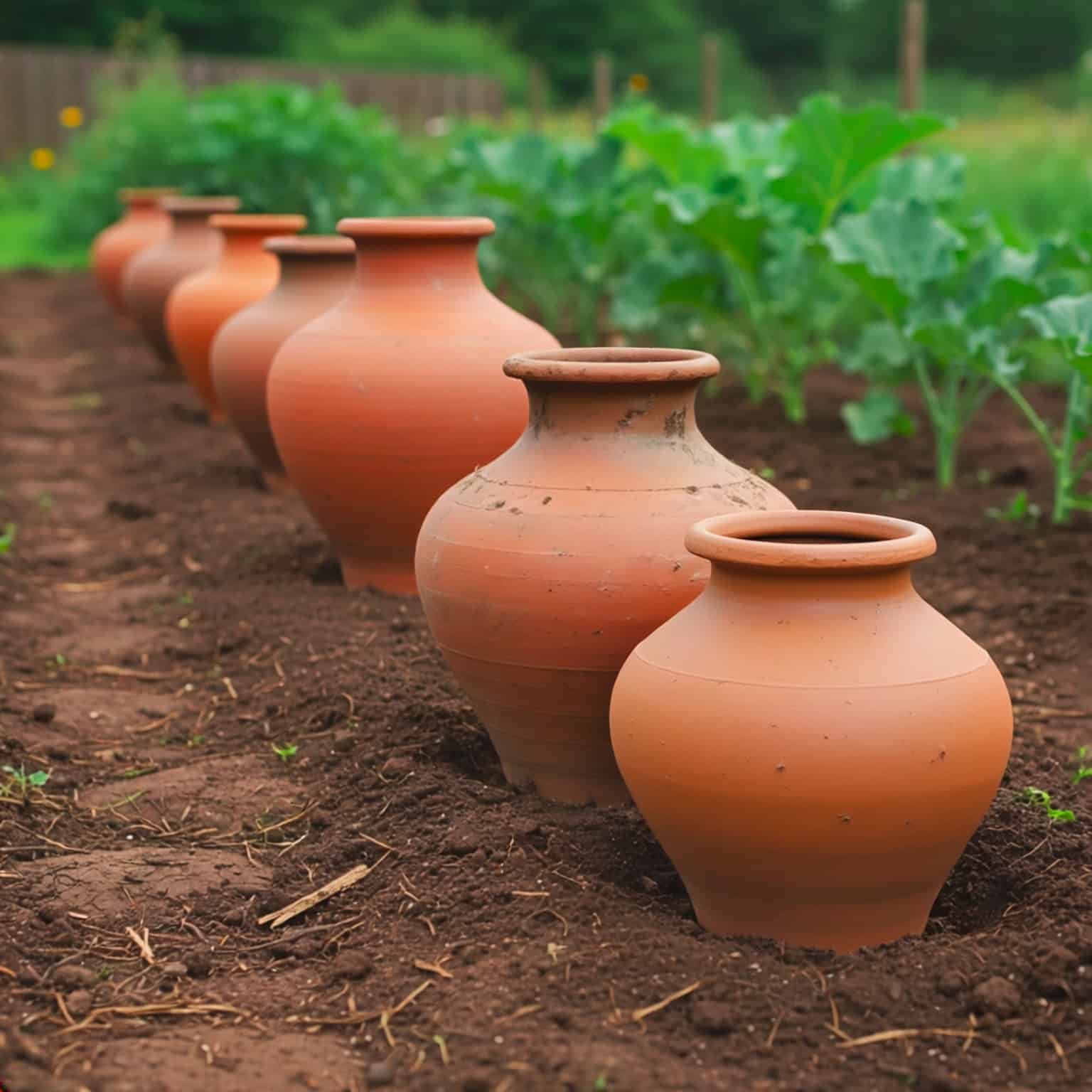
Olla pots are one of those rare garden tools with a 4,000-year track record behind them — and they work just as well today as they always have. Buried in the soil beside your plants, these unglazed terracotta vessels release water slowly through their porous walls directly into the root zone, letting plants draw up exactly what they need without any timers, pumps or daily attention required.
It’s about as close to zero-waste irrigation as it gets — and for anyone growing vegetables, herbs or container plants with an eye on water use, they’re worth knowing about.
The Olla Company produces a well-made range of classic terracotta ollas available in three sizes — Mini, Small and Large — covering irrigation diameters from 30cm up to 90cm. Made from high-quality natural terracotta, their packaging is 100% recyclable, compostable and worm-bin friendly, with zero plastic and no Styrofoam. A small business with genuine sustainability credentials, their ollas are slip-cast and hand-finished, with the natural variation in colour and texture that comes with properly made terracotta.
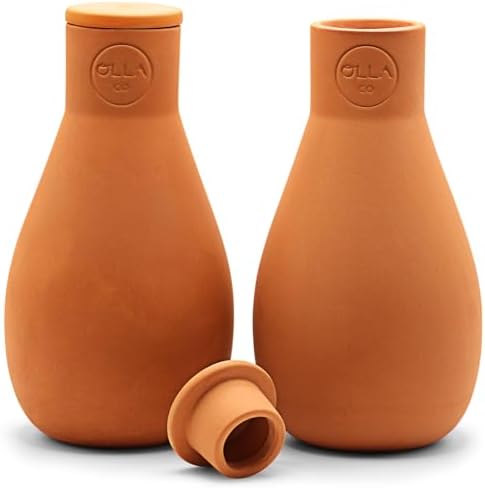
- SAVE TIME – Simply bury the Olla up to its neck, fill it with water and put on its lid! Refill with water at your convenience, any time of day or nigh…
- CONSERVE WATER 70% – No more over-watering or under-watering your plants and no water wasted. Plants “drink” exactly the amount of water they need.
- PROMOTE HEALTHY ROOT GROWTH – Keep plants healthy and vibrant by watering where they need it most – the roots. Ollas are buried in the soil near each …
Back to the Roots brings the same principle to a modern garden context with their self-watering terracotta olla pots, available in a pack of three and designed to provide around a week of consistent moisture per fill. A brand with a long-standing commitment to organic, sustainable growing, their olla pots are a well-reviewed option for both indoor and outdoor use.
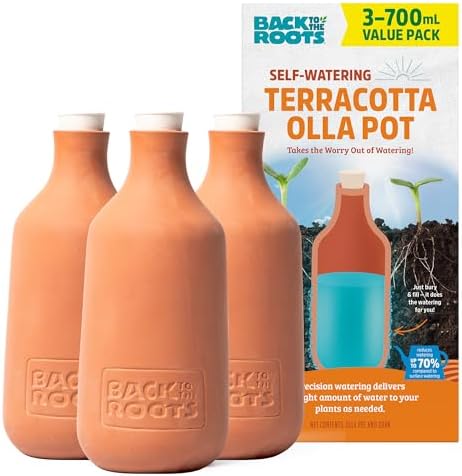
- 18 Diameter Coverage to support 2 large plants
- Weather-Proof Rubber Stopper prevents evaporation
- 700 mL Capacity covers you during those long weekend getaways
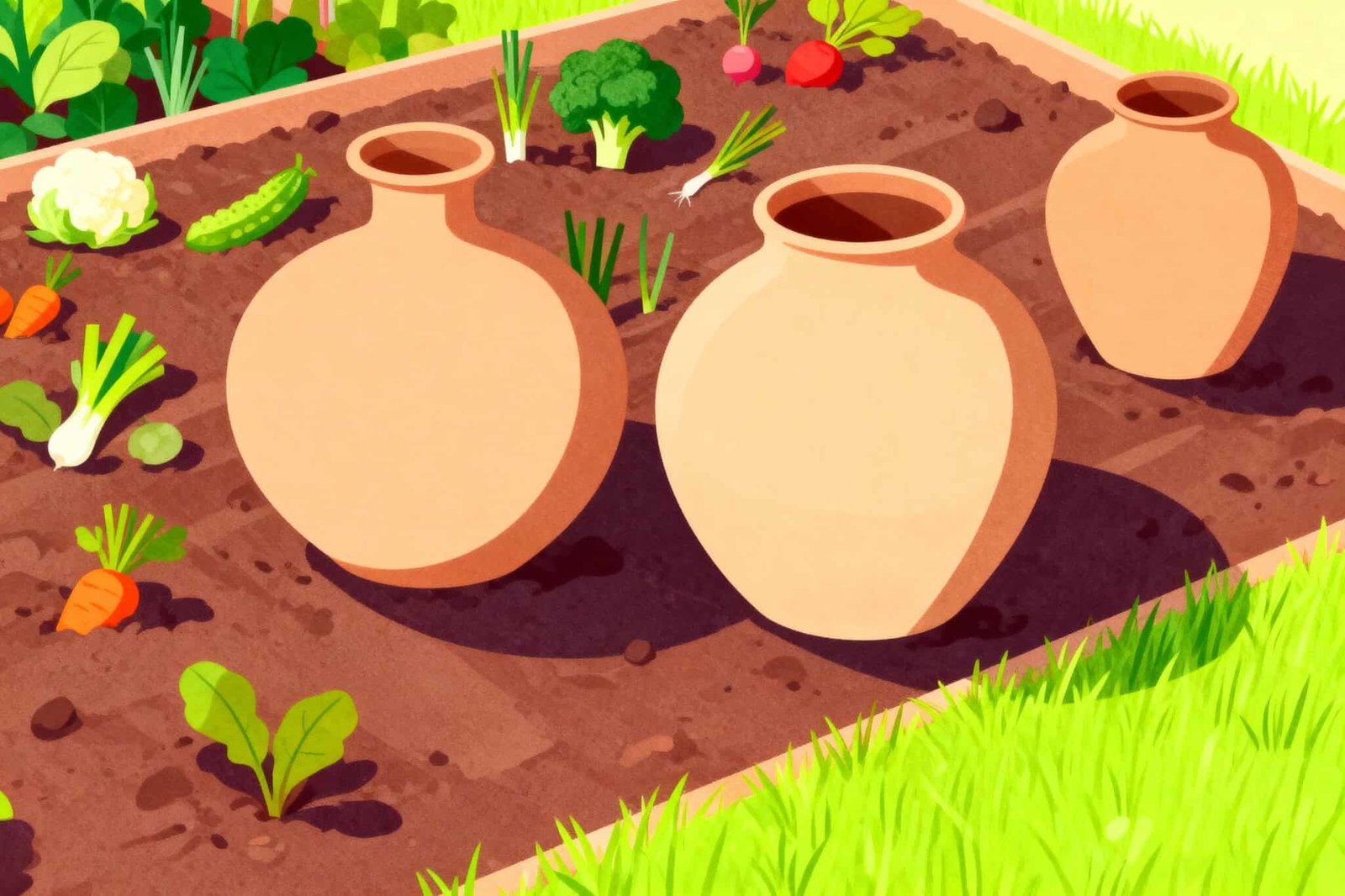
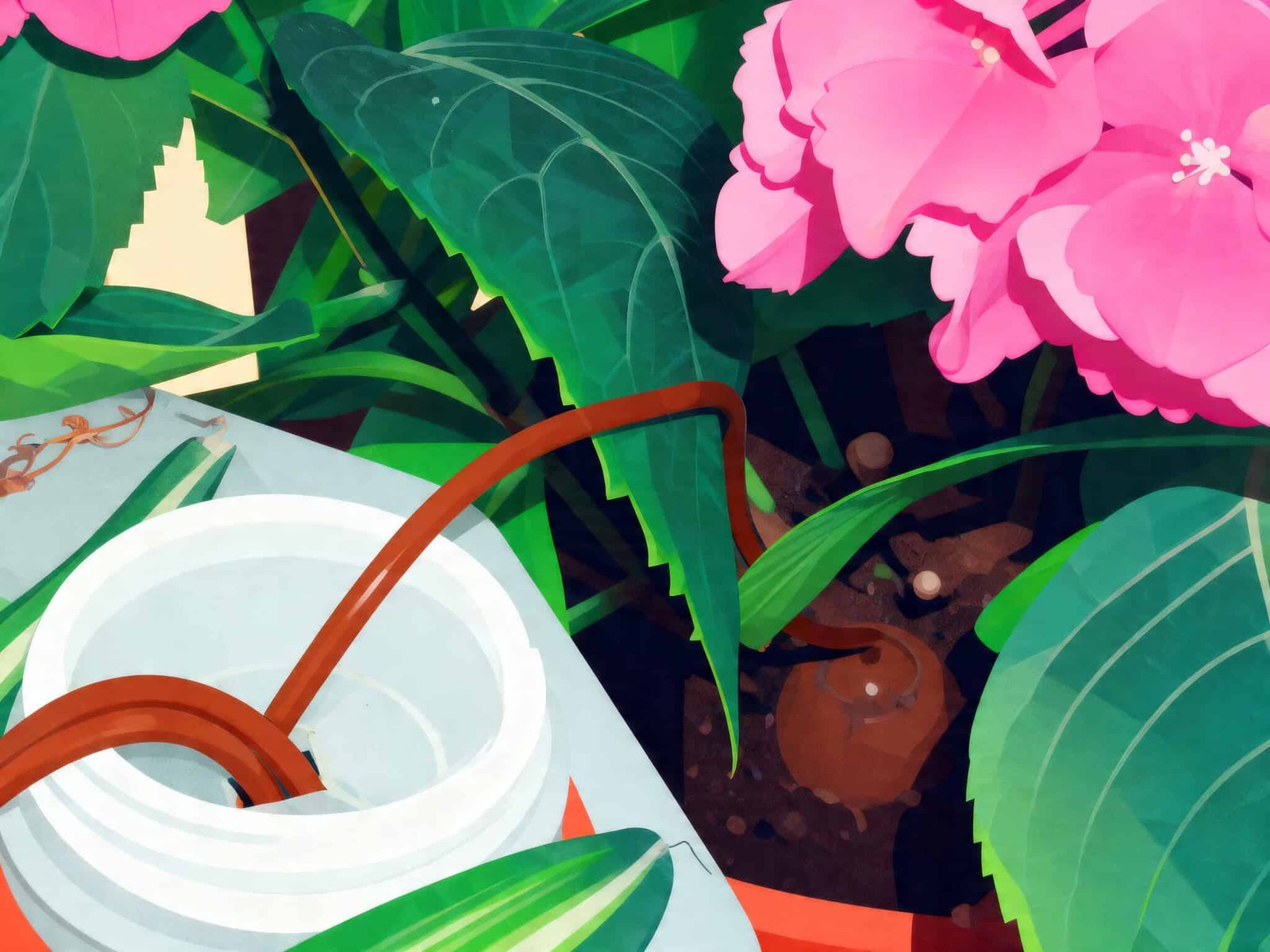
Olla pot irrigation works on a principle that’s almost impossible to improve on. Bury an unglazed terracotta vessel in the soil beside your plants, fill it with water, and leave it. The porous clay walls do the rest — releasing moisture slowly and directly into the root zone in response to how dry the surrounding soil actually is. No timers, no pumps, no guesswork. Just consistent, self-regulating hydration that the plant controls entirely on its own terms.
That self-regulation is what makes ollas so effective in practice. Dry soil creates tension that draws water through the clay walls faster. Moist soil slows the process naturally. The result is a watering system that responds to what the plant actually needs rather than delivering a fixed amount on a fixed schedule — which is how most conventional watering works, and why so many plants end up either overwatered or underwatered despite regular attention.
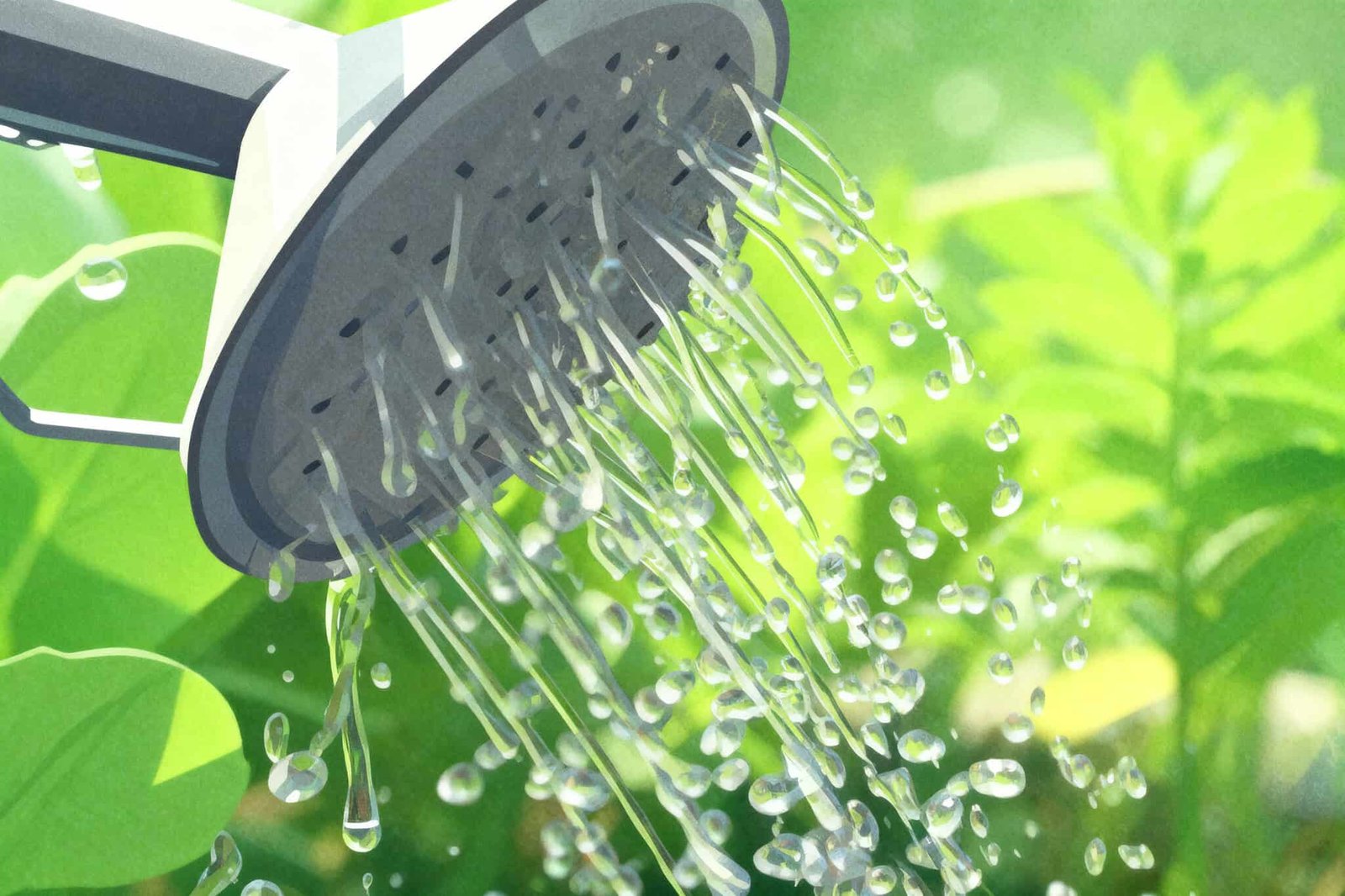
The water efficiency figures are hard to argue with. Because delivery happens below the surface with no evaporation or runoff, olla irrigation consistently uses around 50% to 70% less water than conventional surface watering. For a kitchen garden running through a full growing season, that saving adds up considerably. Roots are drawn downward toward the buried pot, developing the deep, resilient structure that helps plants cope during dry spells without any additional intervention.
There’s a useful secondary benefit too — because the soil surface stays dry, weed seeds at the surface don’t germinate as readily as they do when overhead watering keeps the top layer consistently damp. Less watering and less weeding in the same system is a combination most gardeners will appreciate.
Installation takes minutes. Bury the pot close to your plants with just the neck above soil level, fill with water, cover loosely to limit evaporation and keep out insects, and refill once or twice a week as needed. Most ollas need a short settling-in period of a few weeks while roots grow toward the moisture source — after that, surface watering becomes largely unnecessary.


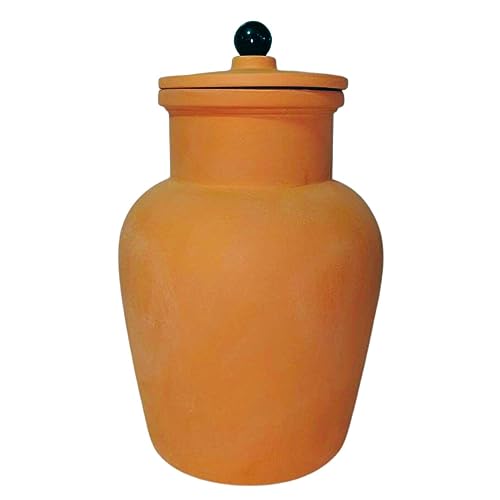
More about olla pots
Olla pots suit any gardener who wants to water more efficiently without adding complexity to their routine. They require no electricity, no specialist knowledge and no ongoing maintenance beyond a periodic refill. In a vegetable bed, a kitchen garden or a greenhouse, a well-placed olla quietly transforms how consistently your plants are hydrated — and how little water it takes to keep them that way.
One pot covers a radius of roughly 30 to 45cm, so larger beds simply need more than one. Clay soils slow the seep rate slightly, sandy soils speed it up — a little observation in the first week or two will tell you exactly what your garden needs.
For the full story on how olla pots work and how to get the best from them in your garden, our olla pot guide is worth reading alongside this page.