If you’ve ever watched rainwater rush off your driveway, lawn or roof and disappear down a drain, you’ve seen the problem that rain gardens are designed to solve. It’s a surprisingly simple concept, and one that can make a genuine difference — both to your garden and to the local environment around it.
So what exactly is a rain garden?
A rain garden is a shallow, planted depression in the ground designed to capture rainwater runoff and allow it to soak slowly back into the soil. Rather than letting that water race off hard surfaces and into the stormwater system — taking pollutants with it — a rain garden holds it in place long enough for the ground to absorb it naturally. The result is less runoff, less flooding risk, and more water being returned to the water table where it belongs.
They’ve been used in landscape design for decades, but they’re becoming increasingly popular with ordinary gardeners who want their outdoor space to do something useful as well as look good.
How does it help with water conservation?
The water conservation benefits are twofold. First, by capturing runoff you’re preventing usable water from being wasted — instead of disappearing into the drain, it’s being put back into the ground. Second, because rain gardens are planted with species that are adapted to both wet and dry conditions, they typically need very little supplemental watering once established. The garden largely takes care of itself.
On a wider scale, rain gardens help reduce the pressure on stormwater systems during heavy rainfall, which in urban and suburban areas can be a significant issue. A well-placed rain garden can absorb thousands of gallons of water a year that would otherwise contribute to runoff and flooding.
How to build a rain garden
You don’t need to be a landscape architect to put one together, but a little planning goes a long way.
Start by identifying where water naturally collects or flows in your garden after rain — this is where a rain garden will be most effective. Avoid positioning it too close to your house foundations; around three metres away is a reasonable minimum.
Dig a shallow basin — typically around 15 to 20cm deep — and make sure the base is reasonably level so water spreads evenly rather than pooling in one corner. The size will depend on how much runoff you’re trying to capture, but even a modest garden can benefit from something relatively small.
Improve the drainage in the base by loosening the soil and mixing in some compost. If your soil is particularly heavy clay, adding a little sand helps too. The goal is a base that absorbs water within 24 to 48 hours — you’re not creating a pond, just a temporary holding area.
You can direct water into the rain garden using a simple channel from a downspout, a gap in a lawn edge, or just by taking advantage of the natural slope of the land.
What to plant
Plant choice is important. You need species that can handle occasional waterlogging after heavy rain, but also cope during dry spells in summer. Native plants tend to work best because they’re already adapted to local conditions.
Good options include:
- Native grasses and sedges — tough, low maintenance, and effective at absorbing water
- Iris — particularly yellow flag iris, which thrives in periodically wet conditions
- Astilbe — handles moisture well and adds real colour
- Ferns — ideal for shadier rain gardens
- Rudbeckia and echinacea — drought tolerant once established, and attractive to pollinators
A mix of deep-rooted plants will help water penetrate further into the soil, which is ultimately what you’re aiming for.
A low-effort, high-impact addition
Once established, a rain garden is about as low maintenance as a garden feature gets. It doesn’t need irrigation, it largely looks after itself, and it’s actively doing something useful every time it rains. For anyone interested in gardening more sustainably, it’s one of the more rewarding projects you can take on — and the results speak for themselves.
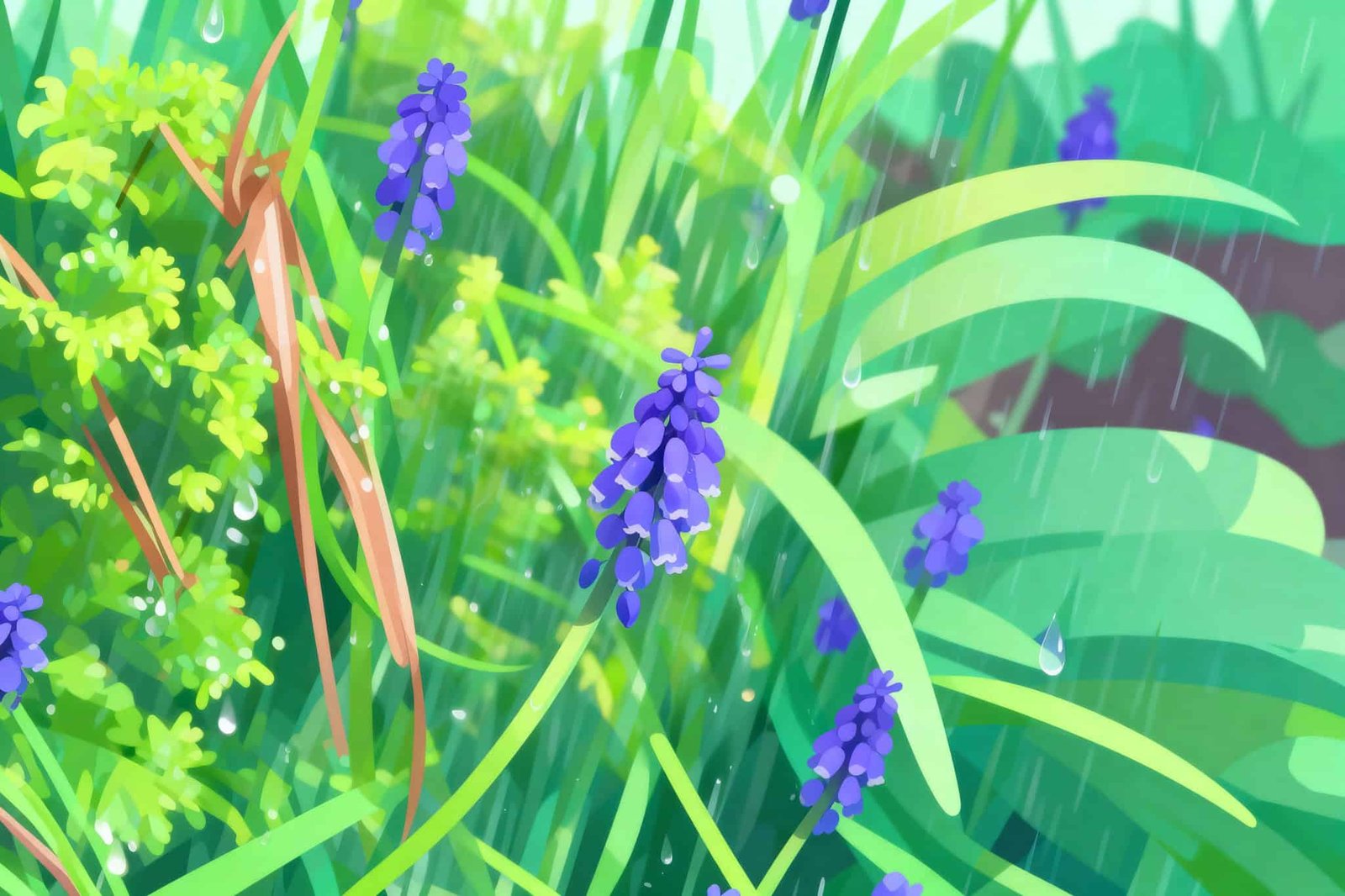
Illustration based on a photo by PollyDot via Pixabay; image used for editorial purposes with no endorsement implied.