There’s a reason soaker hoses have been a staple of productive gardens for decades — they do something that most watering methods don’t, which is deliver moisture slowly, at ground level, directly where roots can actually use it. No spray, no runoff, no significant evaporation. Just a steady seep along the length of the hose that the soil absorbs at its own pace.
From porous rubber hoses winding through established flower beds to flat hoses laid along vegetable rows, the range available suits most garden layouts. And for anyone trying to water more efficiently without adding complexity to their routine, they’re one of the most practical starting points available.


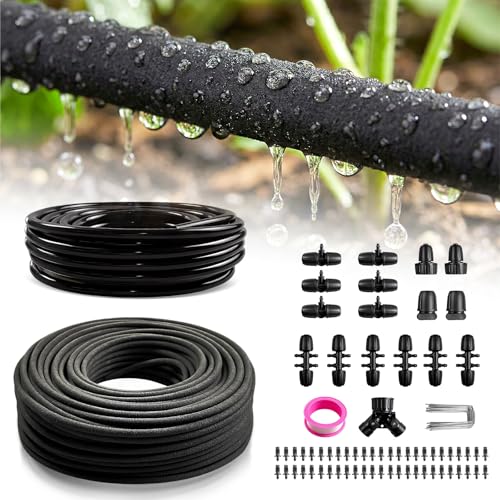
What makes soaker hoses more efficient?
Most conventional watering methods have the same fundamental inefficiency built in — water is applied from above, lands on the soil surface, and has to work its way down to the root zone before it can do anything useful. A significant amount never gets there, lost to evaporation or running off before it soaks in. On a warm day, with a sprinkler or an overhead hose, the waste can be considerable.
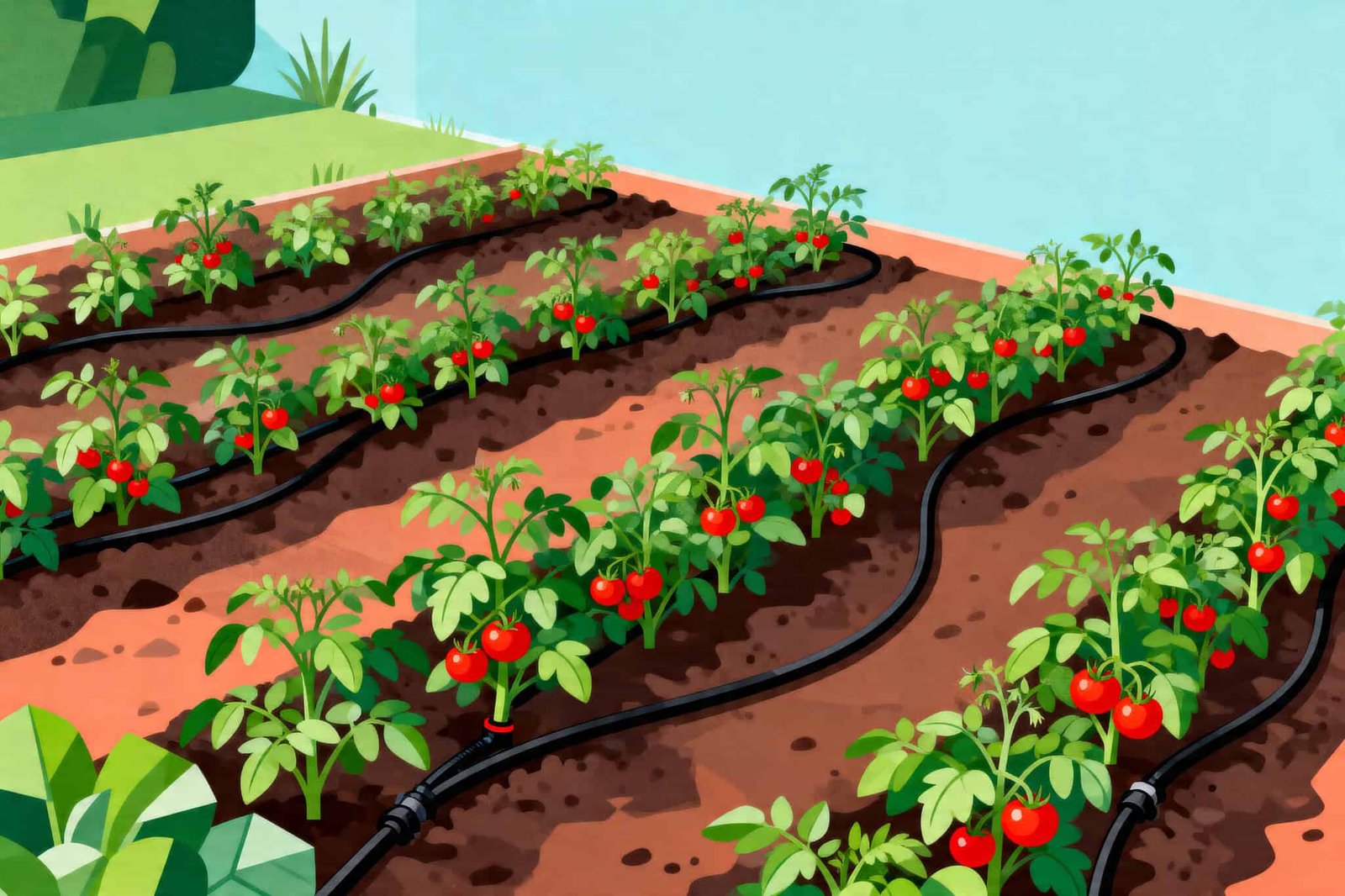
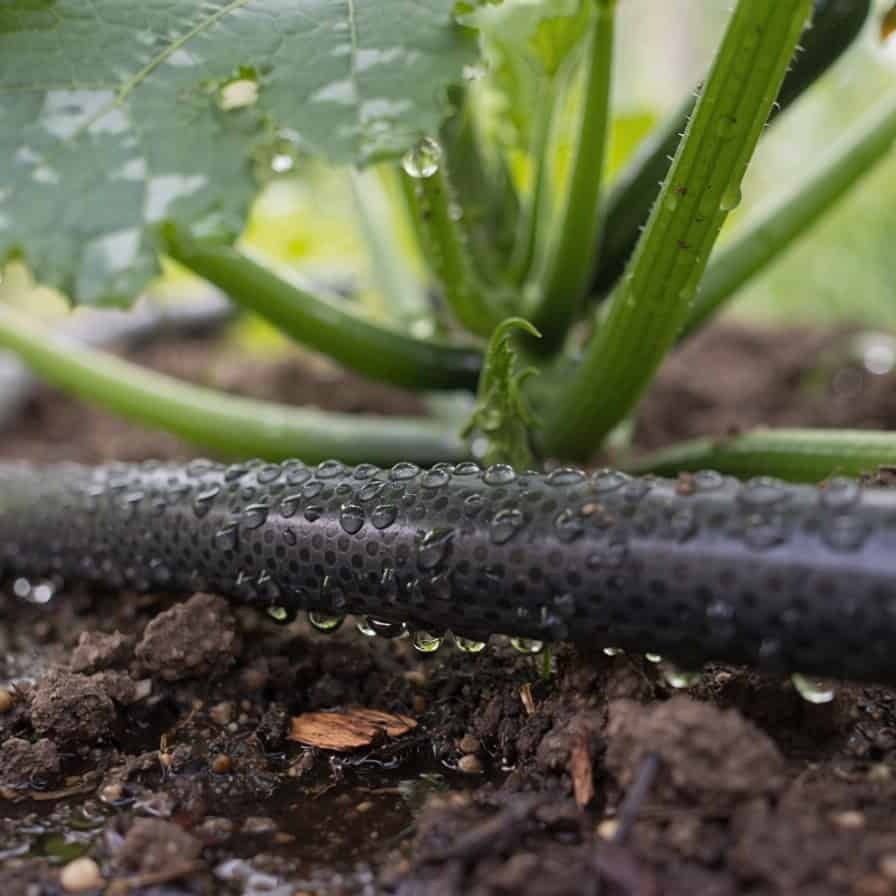
Soaker hoses work from the ground up instead. Water seeps slowly through the porous wall of the hose along its entire length, saturating the soil at the base of plants directly and consistently. Because the delivery rate is low and continuous, the soil has time to absorb the moisture properly rather than shedding it as runoff. The root zone stays evenly hydrated without the surface ever becoming waterlogged.
The difference this makes to plant health is more significant than it might sound. Roots follow moisture — in soil that’s consistently damp at depth, they grow downward and develop the kind of deep, resilient structure that helps plants cope with dry spells. In soil that’s only ever moist near the surface, roots stay shallow and the plant becomes dependent on frequent watering to survive. Soaker hoses, used regularly, actively encourage the former.


More about soaker hoses
Soaker hoses available in a few different forms depending on the application. Porous rubber hoses are the most versatile — flexible enough to wind around established shrubs and perennials, durable enough to leave in place season after season. Flat soaker hoses work particularly well along straight vegetable rows or raised beds where a more structured layout suits the planting. Both types can be connected directly to a tap or fed from a water butt, and adding a simple timer turns the whole setup into something that runs itself.
Pairing a soaker hose with a layer of mulch over the top takes efficiency a step further — the mulch slows evaporation from the soil surface and keeps the moisture the hose delivers where it belongs for longer.
Installation takes minutes. Lay the hose along rows or around the base of plants, connect it to your water source, and adjust flow with a simple inline valve or pressure regulator if needed. There’s no specialist knowledge required and very little that can go wrong. At the end of the season most hoses can be rolled up and stored away, ready to use again the following year.
For anyone who wants to water more thoughtfully without investing in a complex irrigation system, a soaker hose is about as straightforward an upgrade as it gets.
Pair your soaker hose with a good mulch to lock in moisture for longer: