Lawns are thirsty. On a warm summer day, a typical garden lawn can consume a surprising amount of water — and much of it is wasted through overwatering, poor timing, or simply letting a sprinkler run longer than necessary. For homeowners who care about their environmental impact, the lawn is often one of the biggest areas where better habits can make a real difference.
The encouraging thing is that a well-maintained lawn doesn’t need as much water as most people assume. With the right approach, you can keep your grass healthy while significantly reducing how much water you use in the process.
Collect rainwater instead of reaching for the tap
This is the single most effective change most homeowners can make, and it applies to lawn care just as much as it does to borders and beds. A rain barrel positioned beneath a downspout captures the water that would otherwise run straight off your roof and into the drain — water that costs you nothing and is, in many ways, better for your garden than treated tap water.
A barrel the size of an oil drum holds around 70 gallons, which goes a long way during dry spells. For larger lawns, linking two barrels in series doubles your capacity without much additional effort or expense. Our guide to rainwater harvesting and rain barrel installation covers the practical details of setting one up.
Switch to a soaker hose
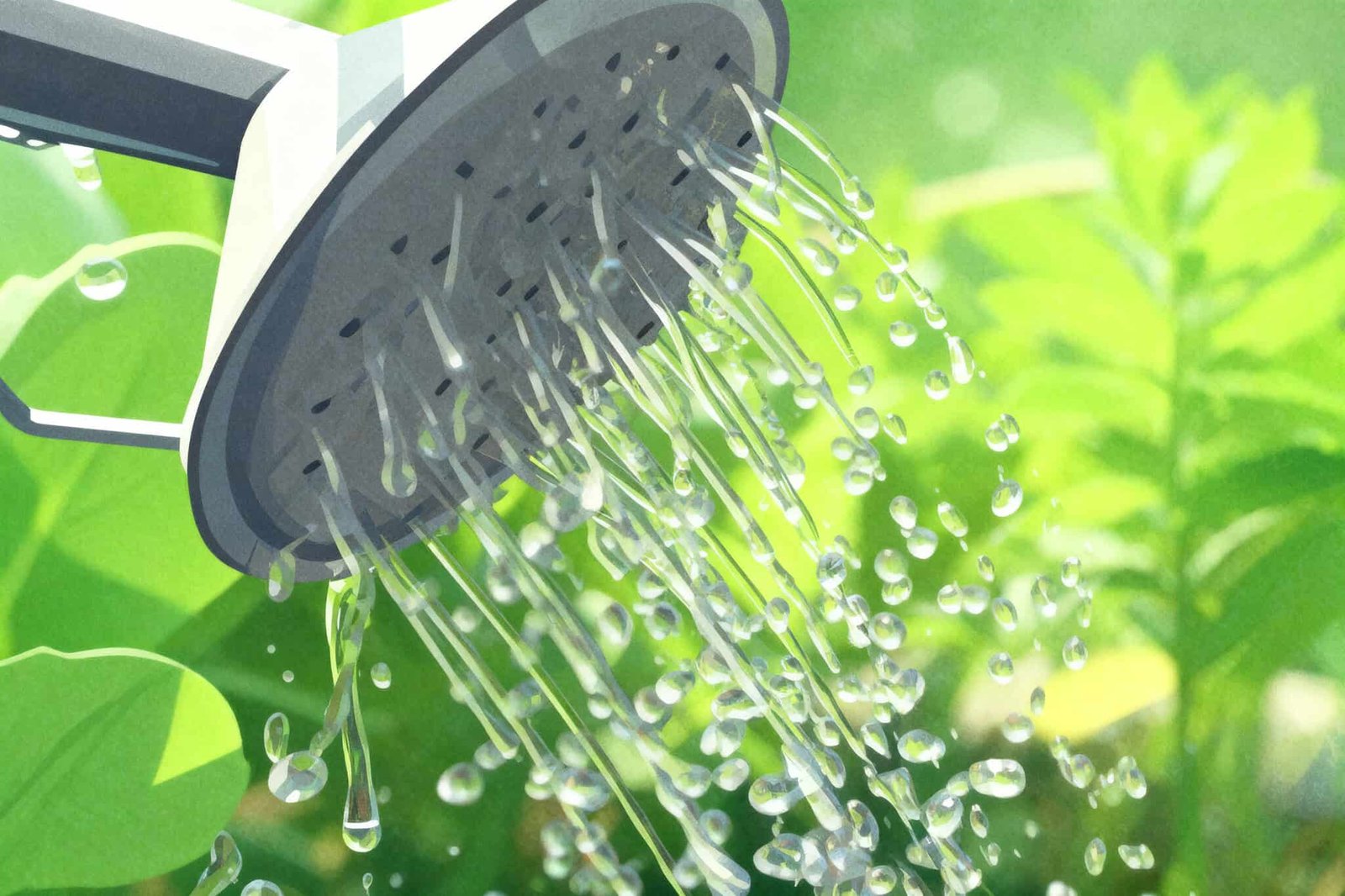
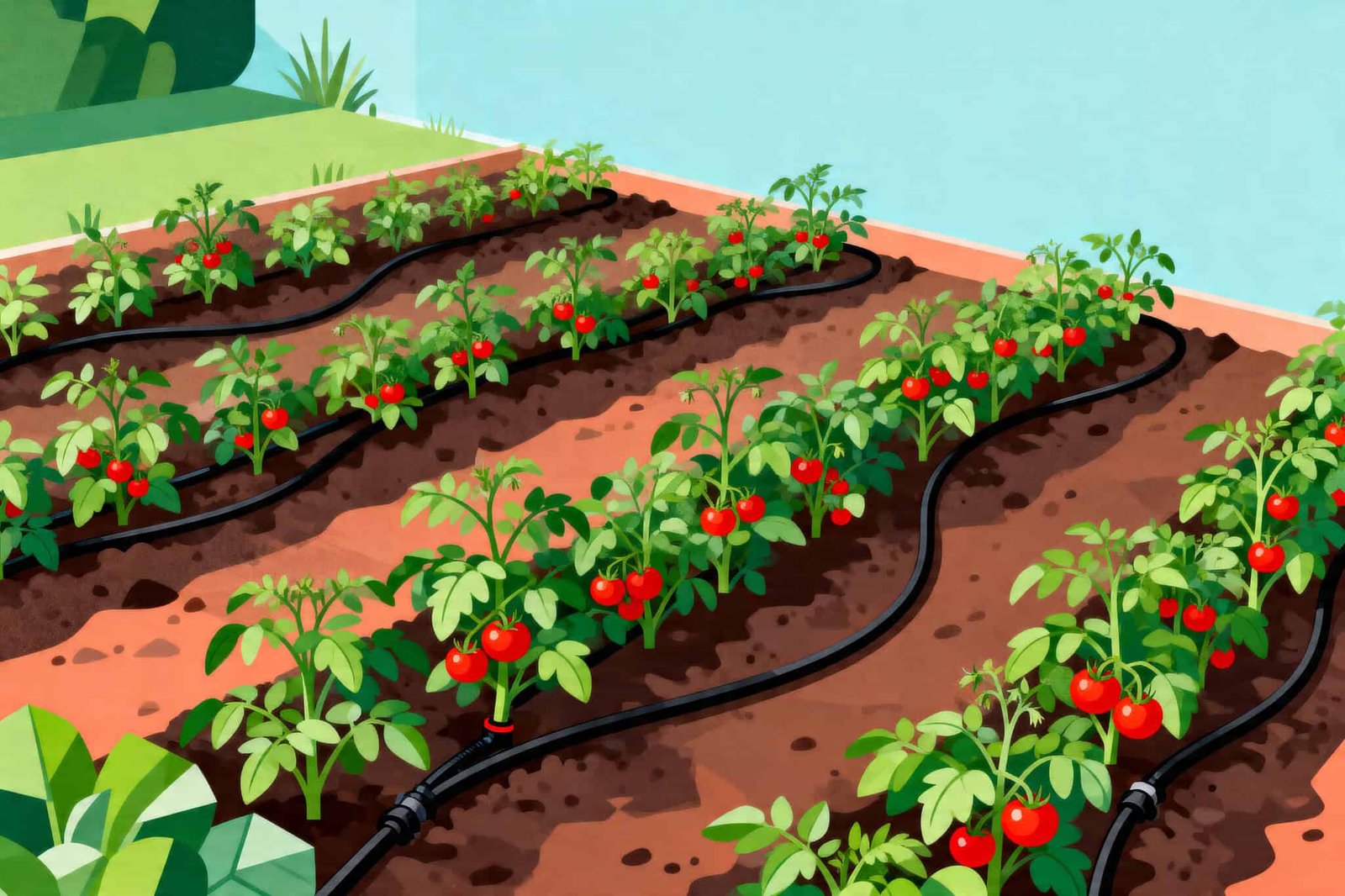
A standard garden hose or sprinkler delivers water indiscriminately — much of it lands where it isn’t needed, and a significant portion evaporates before it reaches the roots at all. A soaker hose works very differently. It’s a porous hose that seeps water slowly and steadily along its entire length, delivering moisture directly to the base of the grass and into the root zone rather than spraying it into the air.
The result is a more efficient use of water, less evaporation, and grass that develops deeper roots because it’s encouraged to seek moisture downward rather than relying on surface watering. Soaker hoses are inexpensive, easy to lay out, and one of the more straightforward upgrades you can make to your watering routine.
Water at the right time
Timing has a bigger impact on water efficiency than most people realise. Watering in the middle of the day, when temperatures are at their peak, means a large proportion of what you apply simply evaporates before it can do any good. Early morning is the ideal time — the ground is cooler, evaporation is minimal, and the grass has moisture available to it as temperatures rise through the day.
Evening watering is a reasonable alternative if mornings don’t work, though it’s worth being aware that leaving grass damp overnight can encourage fungal issues in some conditions.
Don’t water the driveway
It sounds obvious, but a surprising amount of water gets wasted on hard surfaces during lawn watering — either through careless hose use or a sprinkler with too wide a reach. Beyond the waste, water running off a driveway or path picks up oil, chemicals and other pollutants as it goes, carrying them into the drainage system and eventually into local waterways. Keeping water on the lawn and out of the gutter is both more efficient and considerably better for the local environment.
Watch for signs of overwatering
More water is not always better. Overwatered lawns develop shallow root systems because the grass has no incentive to grow roots deeper into the soil, making them less resilient during dry periods — the opposite of what you want. Moss appearing on a lawn is one of the clearest signs that it’s receiving too much water. Grass that feels spongy underfoot or soil that stays wet for extended periods after watering are other indicators worth paying attention to.
A flow meter attached to your outdoor tap is a practical way to monitor exactly how much water you’re using each time, which makes it much easier to dial things back sensibly rather than guessing.
Consider alternatives to a traditional lawn
For those in particularly dry climates, or anyone looking to reduce garden maintenance significantly, it’s worth at least considering whether a traditional lawn is the right choice. Drought-resistant ground cover plants, gravel gardens, or artificial grass all eliminate the need for regular watering entirely. Artificial grass in particular has improved considerably in recent years — it’s far more realistic in appearance and feel than older versions, and for households in drought-prone areas it’s a genuinely practical option.
For anyone who wants to keep their lawn but water it more thoughtfully, the steps above are a reasonable place to start. Small changes — better timing, a soaker hose, a rain barrel — add up to something meaningful over the course of a season.
Illustration based on a photo by marionberaudias via Pixabay; image used for editorial purposes with no endorsement implied.