Most plant lovers reach the same point eventually — a holiday booked, bags packed, and a growing sense of unease about what’s going to happen to the plants while they’re gone. It’s a genuinely common problem, and one that’s easier to solve than you might think.
The good news is that with a little preparation before you leave, most houseplants will come through a week or two without you in perfectly good shape. The approach you take will depend on how long you’re away and how demanding your plants are, but there are reliable options for almost every situation.
Before you leave
A few simple steps before you walk out the door can make a significant difference to how your plants cope in your absence.
First, move plants away from sunny windowsills if you can. Direct sun increases the rate at which soil dries out, so repositioning them somewhere with bright but indirect light buys them more time between waterings.
If you’re planning to turn the air conditioning down while you’re away, bear in mind that a warmer house means soil dries out faster. Factor that into whichever watering method you choose.
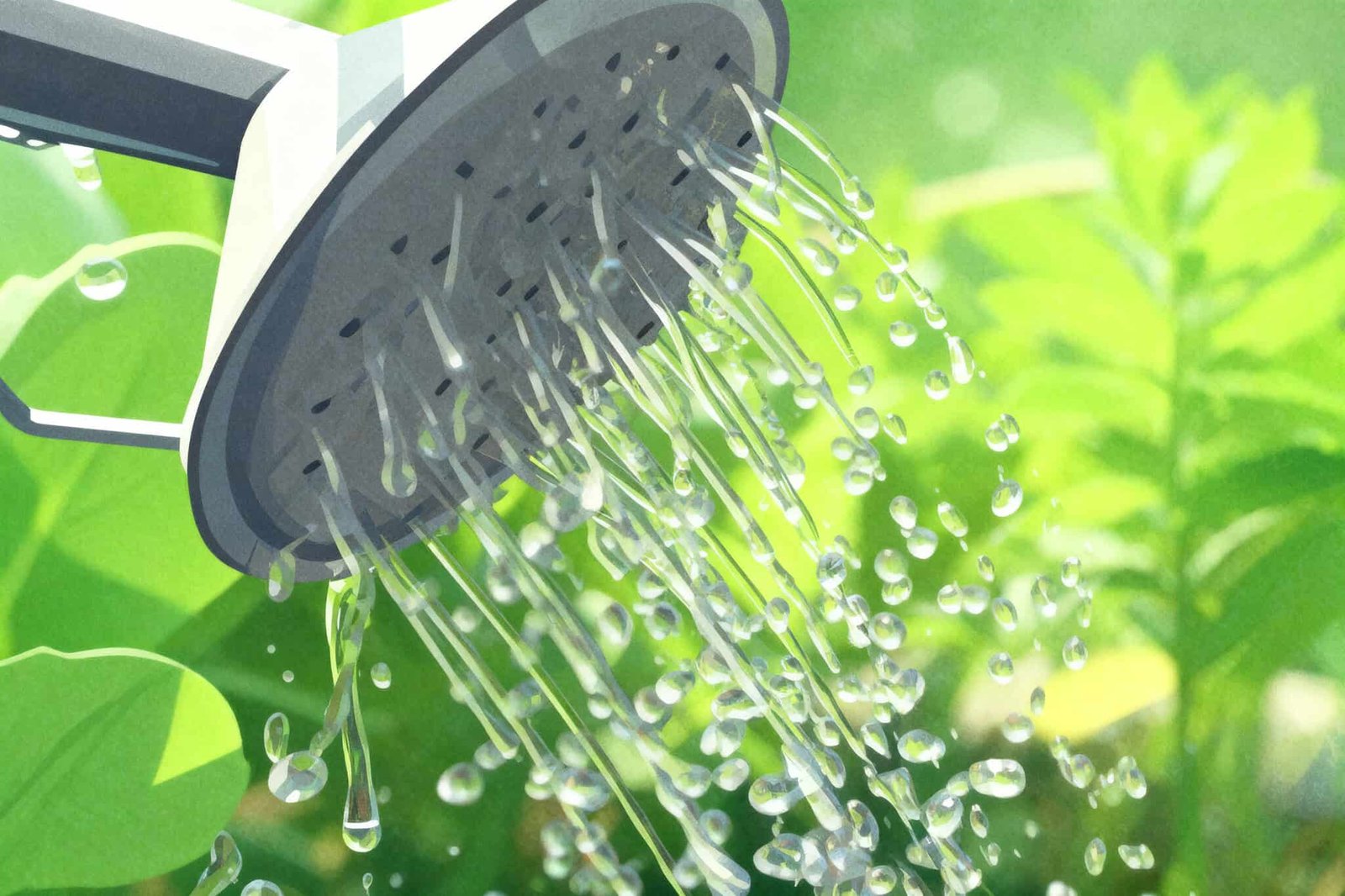
Give every plant a thorough watering just before you leave — not a quick top-up, but a slow, generous soak until water begins to run freely from the drainage holes at the bottom of the pot. This ensures the entire root zone is fully hydrated rather than just the surface layer, which makes a real difference to how long the plant can go without further water.
For trips of a few days to a week
For shorter trips, a thorough pre-departure watering is often enough for most houseplants on its own, particularly if you’ve moved them out of direct sun. Hardier plants — pothos, snake plants, ZZ plants — will manage this kind of period without any intervention at all.
For plants that are a little thirstier, a simple self-watering tray can bridge the gap. Fill a shallow container with water and set the plant pot inside it, making sure the pot has drainage holes so the roots can draw up moisture as the soil dries out. It’s not a method for long-term use — roots left sitting in standing water for extended periods can develop problems — but for a few days it works well.
For longer trips
If you’re going to be away for two weeks or more, it’s worth investing in a more reliable solution. Fortunately there are several good options, and none of them are particularly expensive.
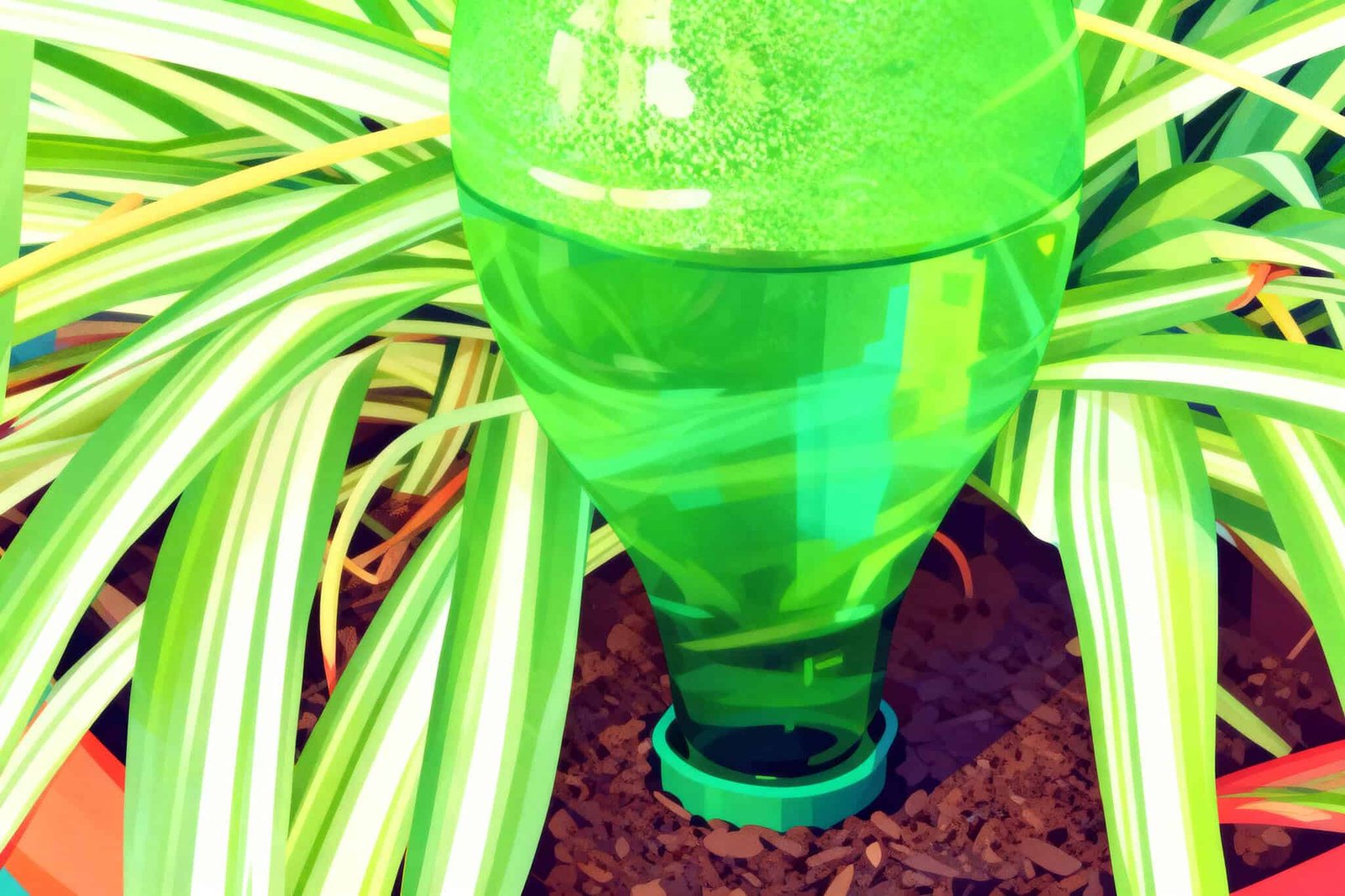
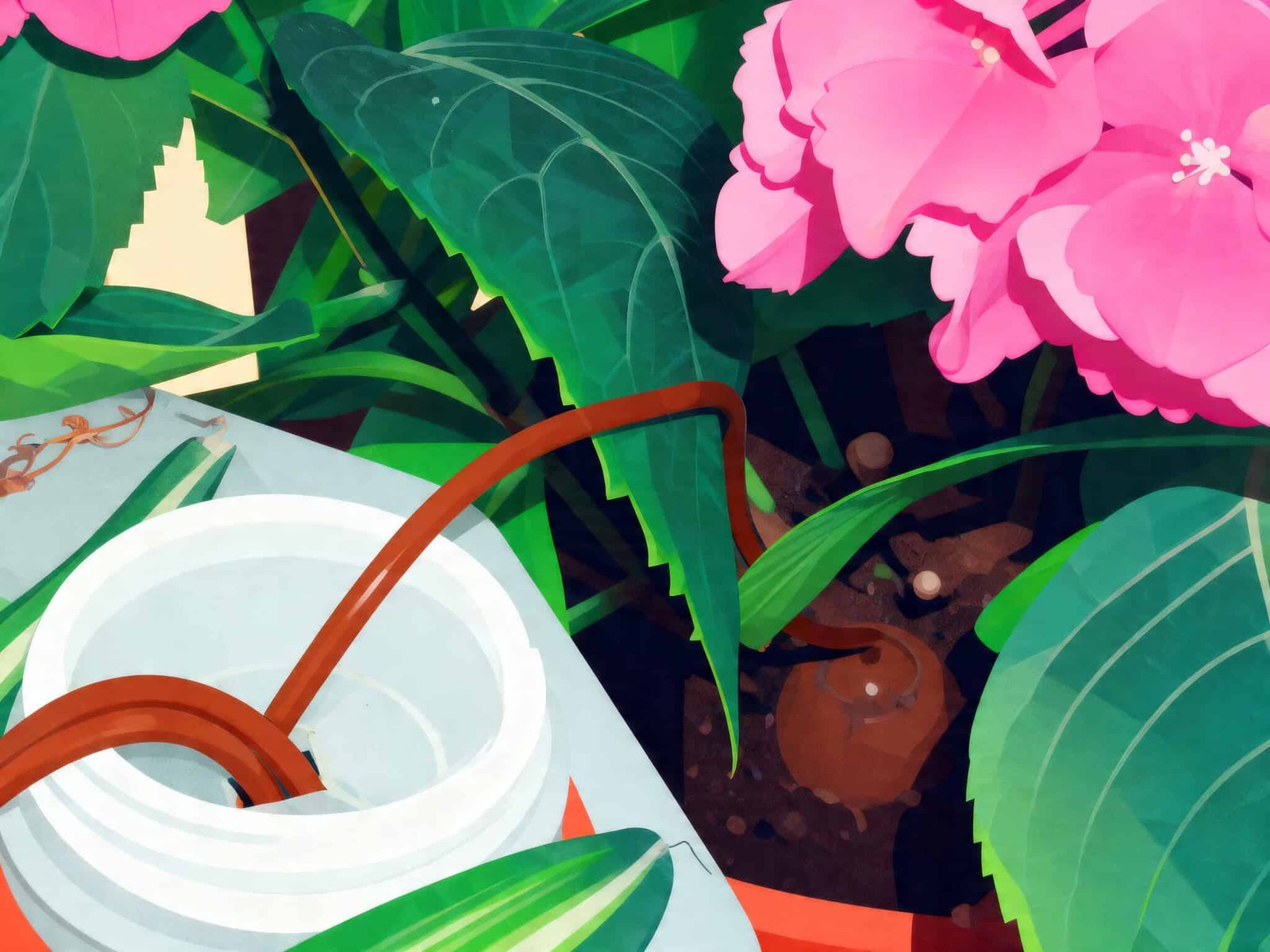
- Watering spikes and probes are among the most straightforward. A ceramic or plastic spike is pushed into the soil and connected to a water reservoir — often an inverted bottle — which releases moisture slowly and consistently over several days or weeks depending on the size of the reservoir. They’re adjustable, reusable and widely available. Our guide on watering spikes and bottle top systems explains how these work in more detail.
- Capillary mats are worth considering if you have a larger number of plants to look after. A capillary mat is an absorbent mat that sits on a draining surface — a kitchen worktop near the sink works well — with one end trailing into a container of water. Plants placed on the mat draw up moisture through their drainage holes by capillary action as their soil dries. It’s a passive, low-tech system that works surprisingly well for a wide range of houseplants.
- Self-watering planters are also worth considering if you want a longer-term solution. By storing water in a reservoir below the soil and letting roots draw up moisture as needed, they remove the daily guesswork entirely — and because water isn’t sitting on the surface, very little is lost to evaporation. For anyone who travels regularly or simply wants one less thing to think about, they’re a practical and sustainable upgrade to a standard pot.
- Watering wicks operate on a similar principle. A length of absorbent cord runs from a container of water into the soil of the plant pot, delivering a slow trickle of moisture continuously. They’re particularly useful for individual plants that need more careful attention, and they can be set up with nothing more than some cotton rope and a jar of water.
Ask someone anyway
Even with a good system in place, it’s worth asking a neighbour or friend to check in at least once during a longer trip. Systems can get knocked over, reservoirs can run dry unexpectedly, and having a second pair of eyes is a reasonable precaution for anything you’d be genuinely upset to lose.
A little preparation goes a long way. Most plants are more resilient than their owners give them credit for — they just need a reasonable starting point and a steady supply of moisture to draw from while you’re gone.